Choosing a reliable sea container manufacturer can influence cargo safety, delivery schedules, and long-term operating costs. Global buyers need more than attractive prices. They need verified production capacity, consistent materials, responsive communication, and practical export experience.
China has become a major source of ISO shipping containers, refrigerated units, specialized equipment, and custom-built models. Leading manufacturers often support international projects with factory inspections, container testing, coating systems, and documentation assistance. Details matter. A well-made door should close evenly. Corner castings should withstand repeated lifting. The floor should remain stable under demanding cargo loads. These small checks can prevent expensive problems later.
This guide introduces China’s leading manufacturers for global buyers. It considers product quality, certifications, factory capability, customization options, and after-sales support. It also examines how suppliers handle samples, production timelines, inspections, and shipping coordination. Buyers should compare evidence, not promises. Factory photographs are useful, but independent verification is stronger. Some manufacturers may excel in standard dry containers but offer limited experience with special designs. Others may communicate well yet provide incomplete technical documents. That gap deserves attention.
No supplier fits every project. A company serving a construction firm may not suit a logistics fleet. Budget, climate, cargo type, port requirements, and replacement plans all change the decision. This overview aims to provide a practical starting point, while recognizing that supplier information can change. Careful questions, documented specifications, and pre-shipment inspection remain essential. In real purchasing work, perfection is rare. Better decisions come from checking the details that are easiest to overlook.
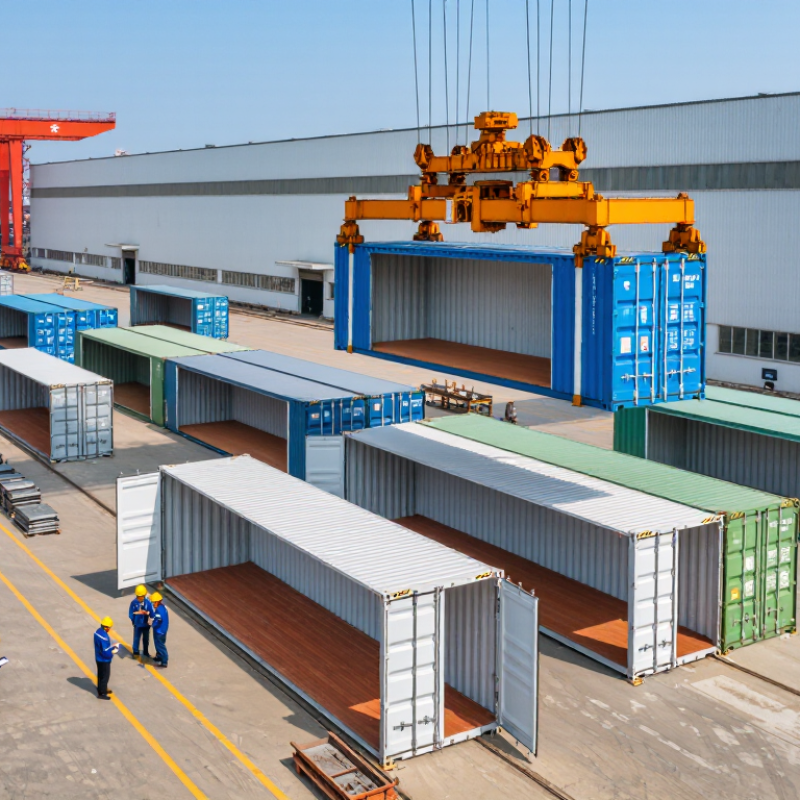
China supplies more than 95% of the world’s dry freight containers, according to industry data referenced by Drewry’s Container Census and recent UNCTAD maritime statistics. This concentration supports large production volumes, standardized designs, and competitive export pricing. In practical terms, a 20-foot container may move from steel processing to final inspection within a highly coordinated industrial network. That scale matters.
However, the percentage needs careful interpretation. It describes global manufacturing output, not every container owned, leased, or operated by Chinese companies. Container xChange market analysis also shows that new production responds quickly to shipping demand, equipment shortages, and repositioning costs. The number is strong, but not perfectly clean.
For global buyers, factory evaluation should go beyond a low quotation. Check Corten steel grades, corner-casting accuracy, floor load performance, door-gasket compression, weld quality, and water-leak testing. ISO 668 and ISO 1496-1 provide essential dimensional and performance references, while CSC certification supports international use. Request batch-level inspection records, production photographs, and independent pre-shipment testing. Small details matter: uneven door gaps can expose cargo to rain, while rough internal welds may damage packaging during repeated loading. Some suppliers report impressive output figures, yet their quality records remain incomplete. That is where professional judgment becomes necessary.
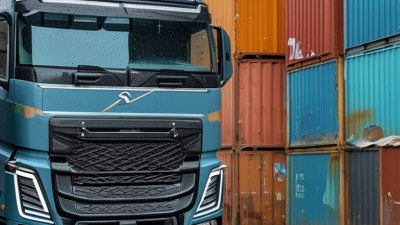
China’s sea container manufacturers supply standard units built around ISO 668 dimensions. For global buyers, these measurements provide a reliable starting point for shipping, stacking, and warehouse planning. A nominal 20ft container measures about 6.058 meters long, 2.438 meters wide, and 2.591 meters high. Its 40ft counterpart keeps the same width and height but doubles the length to approximately 12.192 meters.
The 40ft High-Cube unit uses the same length and width as the standard 40ft model. However, its external height increases to about 2.896 meters. This extra 305 millimeters can improve pallet loading and reduce wasted vertical space. Internal dimensions vary slightly because of wall panels, flooring, doors, and manufacturing tolerances. Small differences matter. A drawing may look perfect, yet a pallet can still catch on the door frame.
Tips: Ask manufacturers for certified dimensional drawings, door-opening measurements, corner-casting details, and internal floor height. Check whether the quoted dimensions are external or internal. Confirm payload limits separately, because usable cargo weight depends on the container’s structure and transport requirements. During inspection, measure several points instead of trusting one reading. That step seems excessive. It is not. Factories may produce consistent units, but minor variations still require review before purchase. A practical comparison should also include flooring condition, ventilation openings, locking bars, coating quality, and inspection records. Measurements alone cannot show the whole container’s reliability.
China’s leading sea container manufacturers serve global buyers with different production strengths. Four major suppliers are widely recognized for scale, engineering depth, and export experience. Their factories commonly produce dry containers, refrigerated units, tank containers, and specialized cargo equipment. Buyers should compare product scope, not only factory size.
A reliable manufacturer should provide material specifications, welding procedures, coating details, and inspection records. Request photographs of corner castings, door seals, floor panels, and locking bars. These small parts often reveal quality more clearly than polished brochures. Factory audits can confirm equipment, worker training, and production consistency. Certification documents also need independent verification.
In practice, large Chinese factories can support high-volume orders and customized dimensions. They may also coordinate shipping schedules through major ports. However, communication quality differs between sales teams and technical departments. That gap can create avoidable mistakes. I would confirm drawings, tolerances, paint systems, and loading limits in writing. Pre-shipment inspections remain valuable, even with an experienced supplier. A container may look excellent outside yet show weak flooring or uneven doors. Buyers should also examine warranty terms, spare parts support, and response times before signing a purchase agreement.
Factory scale is a practical measure for global container buyers. It shows whether a manufacturer can support repeated orders, not only one shipment. Large facilities may operate several production lines, steel-cutting areas, welding stations, and testing zones. Ask for verified annual TEU capacity, recent output records, and production schedules.
A factory producing 50,000 TEU annually may handle standard dry containers efficiently. A larger operation can often manage higher volumes, special dimensions, and seasonal demand. However, stated capacity is not always available capacity. Ask for the previous twelve months’ output, current line utilization, and confirmed monthly allocation. Ask for proof.
Delivery lead time depends on more than factory size. Material availability, coating schedules, inspection requirements, and port distance can change the timeline. For standard units, production may take several weeks after drawing approval and deposit confirmation. Customized units usually need longer engineering and testing periods. Schedules still move.
Experienced buyers should request a milestone plan with cutting, welding, painting, inspection, and loading dates. Factory audits can check equipment condition, worker training, quality records, and container testing procedures. Independent inspections add useful evidence before shipment. Still, no audit removes every risk. A factory may report strong output while facing temporary labor shortages or steel delays. Build buffer time into purchase planning, especially before peak shipping seasons. Contracts should define acceptable quality levels, delay notices, and remedies in clear language.
China Top Sea Container Manufacturers for Global Buyers
A CSC plate is not decoration. It is the container’s legal safety passport for international transport. Buyers should verify the approval number, manufacturing date, maximum gross weight, stacking load, and racking values against production records. A missing or altered plate is a serious warning.
ISO 1496-1 testing covers lifting, stacking, floor strength, and structural resistance. Request signed test reports, material certificates, weld inspection records, and photographs of corner castings. The World Shipping Council’s Containers Lost at Sea 2024 report recorded 576 containers lost in 2023. That figure shows why paperwork and steel quality must match.
An eight-year service life is not automatic. It depends on corrosion, repairs, cargo cycles, handling damage, and inspection history. UNCTAD’s Review of Maritime Transport 2024 describes a massive and aging container transport system, making traceable maintenance increasingly important. Buyers should examine roof panels, door bars, seals, flooring, and underside crossmembers. Look closely.
A new-looking exterior can hide floor weakness. I have seen specifications promise eight years while excluding heavy use, salt exposure, or structural repairs. That wording needs challenge. Ask for a written service-life scope, annual inspection procedure, spare-part availability, and corrosion warranty. Independent pre-shipment inspection is also wise, although it cannot replace continuing maintenance. The strongest supplier provides evidence, not confident promises.
Practical verification framework for evaluating new and used dry freight containers without relying on company or brand claims.
| Due-Diligence Dimension | What Should Be Verified | Relevant Standard or Requirement | Buyer Evidence to Request | Risk Signal |
|---|---|---|---|---|
| CSC compliance | Confirm that the container is approved for international transport and carries a legible safety approval plate. | The International Convention for Safe Containers requires an approved container to display a valid CSC Safety Approval Plate. | Clear plate photographs, approval number, date of manufacture, maximum gross mass, allowable stacking load, and transverse racking test load. | Missing, altered, or unreadable plate |
| CSC inspection status | Check whether the unit is within its inspection period or covered by an approved continuous examination program. | Under the CSC framework, periodic examination is generally required at intervals of no more than 30 months unless an applicable approved examination program is used. | Latest inspection date, next examination date, inspection report, and evidence of any approved examination-program status. | Expired or unverifiable inspection |
| ISO dimensional compatibility | Verify that external dimensions, corner fittings, and handling interfaces match the ordered container type. | ISO 668 defines the classification, dimensions, and ratings of Series 1 freight containers; ISO 1161 covers corner fittings. | Approved dimensional drawing, container type, external and internal dimensions, corner-fitting details, and tolerance information. | Drawing does not match inspection unit |
| Structural performance | Confirm that the frame, corner posts, corner castings, roof, side walls, end walls, doors, and floor can withstand intended handling and cargo loads. | ISO 1496-1 specifies minimum requirements and testing for general-purpose dry freight containers, including structural and operational performance. | Factory test records, third-party inspection report, weld inspection records, frame photographs, and repair history. | Twisted frame or distorted corner post |
| Stacking and lifting tests | Ensure the container is suitable for vertical stacking, crane lifting, and standard intermodal handling. | ISO 1496-1 covers required performance tests; ISO 3874 addresses handling and securing methods for freight containers. | Test procedure, applied load, acceptance result, lifting method, and inspection of corner castings and lifting points. | Test report lacks load or acceptance data |
| Floor capacity | Match the floor rating and condition to the cargo, forklift axle load, and loading method. | ISO 1496-1 includes floor-strength requirements for general-purpose freight containers. Actual permitted cargo depends on the container rating and condition. | Floor material and thickness, rated payload, forklift operating requirements, moisture damage inspection, and repair records. | Soft spots, delamination, or water damage |
| Weatherproofness | Check that the roof, doors, seals, side panels, and welds prevent water ingress during normal service. | Weatherproofness is part of the performance requirements for general-purpose containers under ISO 1496-1. | Water-test record, daylight inspection, door-gasket condition, roof inspection, and photographs from inside and outside. | Visible daylight or wet interior |
| Identification and traceability | Confirm that the identification number on the unit matches the documents and markings. | ISO 6346 provides the identification, coding, and marking system for freight containers. | Container identification number, check digit, size-and-type code, owner or operator code, and matching commercial documents. | Mismatched or repainted markings |
| Maximum gross mass and payload | Confirm the permitted maximum gross mass and calculate payload using the actual tare mass. | Maximum gross mass is marked on the CSC plate. Payload is calculated as maximum gross mass minus tare mass. | CSC plate, verified tare weight, cargo plan, weighing certificate where required, and transport-route limitations. | Conflicting weight data |
| Corrosion and repairs | Assess corrosion depth, patch quality, weld quality, frame alignment, and whether repairs preserve structural integrity. | Repairs must not compromise the container's approved safety and structural characteristics. | High-resolution photos, repair log, corrosion assessment, thickness measurements where appropriate, and independent pre-shipment inspection. | Unreported patches or heavy rust |
| Eight-year service-life claim | Treat eight years as a commercial service-life target, not an automatic technical guarantee. | CSC and ISO compliance establish safety and performance requirements; they do not guarantee a universal eight-year lifespan. | Written warranty terms, coating specification, steel grade, maintenance schedule, expected utilization, environment assumptions, and exclusions. | “8-year life” without conditions |
| Coating and corrosion protection | Verify surface preparation, primer, topcoat, dry-film thickness, and protection of high-risk areas. | Coating performance is determined by the specified system, preparation quality, exposure environment, and maintenance; it is not established by CSC alone. | Paint system datasheets, surface-preparation method, dry-film thickness readings, salt-spray data if specified, and warranty coverage. | No measurable coating specification |
| Factory quality control | Confirm that production controls cover material receipt, welding, dimensions, doors, flooring, coating, and final inspection. | Quality-management certification can support process control, but it does not replace container-specific inspection and certification. | Quality plan, inspection and test plan, calibration records, nonconformance procedure, and lot traceability. | Only generic certificates provided |
| Pre-shipment acceptance | Use an independent inspection before final payment and verify the exact units selected for shipment. | A pre-shipment inspection is a commercial control and should be aligned with the purchase specification, CSC requirements, and applicable ISO criteria. | Signed inspection checklist, serial-number list, defect photographs, corrective-action record, and final acceptance approval. | Inspection limited to factory samples |
Are you still planning to build your shipping container home this year? How about you could save up to $5,000 in delivery costs towards your project?
With the Tiny Home Expos in Brisbane, Adelaide and Canberra in the coming months, we are offering FREE DELIVERY (*up to $5000) to each state the Expo is in, in exchange with using your project as a display at the show. Offer expires 8 weeks before each Expo and limited to ONE project per Expo ONLY so reach out to us now to secure your spot!
Enquire Now