Global sourcing is no longer judged by unit price alone. Delivery stability, traceability, service life, and replacement speed now influence the real purchasing cost. UNCTAD reports that maritime transport carries more than 80% of global merchandise trade, making component reliability critical across long supply routes. A small failure in a conveyor, warehouse door, or industrial guide system can delay an entire shipment.
A Track Slide Roller offers a practical sourcing option for buyers comparing suppliers across regions. Its rolling action can reduce friction, surface wear, and manual handling effort. However, performance depends on more than appearance. Buyers should check load capacity, roller material, bearing protection, mounting tolerance, corrosion resistance, and inspection records. Samples should be tested under realistic loads. Not just displayed.
MHI’s 2024 Annual Industry Report highlights labor shortages, automation investment, and supply-chain resilience as continuing industry pressures. These conditions support a stronger focus on standardized, replaceable components. Martin Christopher, a respected supply-chain scholar, stated, “Supply chains compete, not companies.” His observation fits Track Slide Roller sourcing closely. The supplier, factory, logistics partner, and maintenance team must work as one system.
Still, global sourcing is not automatically better. A lower quotation may conceal inconsistent dimensions, weak packaging, or difficult warranty communication. Experienced buyers should compare total cost, not invoice price. They should also request material certificates, dimensional reports, production samples, and clear lead-time commitments. That process is less exciting, but it prevents expensive surprises. A reliable Track Slide Roller can support smoother operations, yet only when engineering evidence guides the purchase.
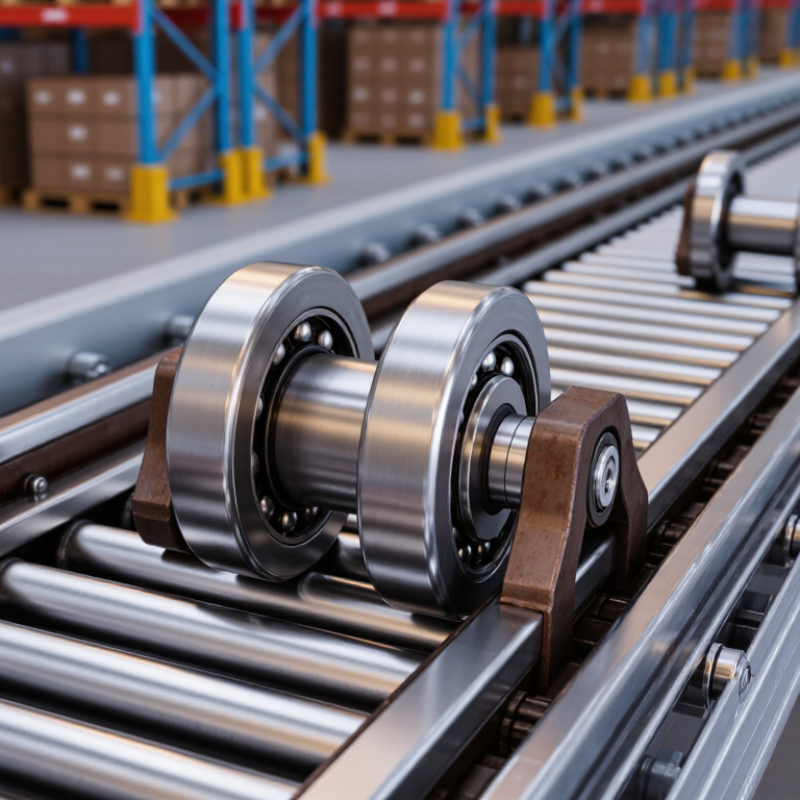
Track slide rollers are mechanical components that guide moving parts along a fixed track. They commonly combine a hardened roller, bearing, stud, and protective seals. The roller turns as a drawer, gate, platform, or machine carriage travels. Its rolling contact reduces friction compared with sliding metal surfaces. The track carries the path, while the roller manages movement and load transfer. Small parts matter.
In practical inspections, I look at load direction before selecting a roller. Radial loads press down on the roller, while side loads challenge its flange and mounting stud. A suitable design needs the correct track width, diameter, clearance, and bearing capacity. Seals help resist dust and moisture, but they cannot repair poor alignment. Excessive preload may create smooth movement at first. Later, it can cause heat, noise, and premature wear.
Global sourcing requires more than comparing unit prices. Buyers should request material details, dimensional tolerances, load test records, and sample approval. I also recommend checking surface hardness and rotation under realistic conditions. A roller that works on a clean bench may fail in a dusty workshop. This is an easy mistake to make. Packaging deserves attention too, because damaged studs or contaminated bearings can ruin an otherwise reliable shipment. Supplier communication should confirm drawings, inspection methods, and replacement expectations before production begins.
| Data Dimension | Typical Data or Specification | How It Works or Why It Matters | Global Sourcing Consideration |
|---|---|---|---|
| Product Definition | A track slide roller is a rolling-element component designed to travel along a rail, track, cam path, or profiled guide surface. | The roller converts sliding contact into rolling contact, reducing friction and wear during linear or curved movement. | The component is available in standardized bearing forms, which can simplify cross-border specification and replacement. |
| Main Components | Outer ring, rolling elements, inner stud or bore, seals or shields, and lubrication. | The outer ring contacts the track while the rolling elements support rotation around the stud or inner ring. | Confirm the complete assembly specification rather than matching only the outside diameter. |
| Common Roller Profiles | Flat, crowned, V-groove, U-groove, and cylindrical track surfaces. | The profile controls contact geometry, alignment behavior, lateral guidance, and resistance to edge loading. | Select the profile according to the mating rail or track; profiles are not automatically interchangeable. |
| Load Direction | Radial load is the primary load; some designs also accommodate limited axial or thrust loading. | The load rating depends on contact stress, roller size, material, track hardness, lubrication, and mounting accuracy. | Request radial and axial load ratings separately and verify the supplier's calculation method. |
| Typical Load Capacity | Small units may support loads from several hundred newtons, while larger industrial units can support several kilonewtons or more. | Actual capacity is determined by dynamic rating, static rating, contact stress, and service-life requirements. | Do not compare capacity values unless test conditions, safety factors, and load direction are equivalent. |
| Speed Range | Many track rollers operate from low-speed indexing motion to approximately 1 m/s; higher speeds require careful design verification. | Speed is limited by bearing size, lubrication, seal friction, heat generation, track finish, and load. | Specify both travel speed and duty cycle, including acceleration, deceleration, and dwell time. |
| Material Options | Through-hardened bearing steel is common; stainless steel and engineered coatings are used for corrosion-sensitive environments. | Material selection affects hardness, wear resistance, corrosion resistance, temperature capability, and cost. | Ask for material grade, heat-treatment condition, hardness range, and corrosion test requirements. |
| Track and Rail Requirements | The mating track should have suitable hardness, surface finish, straightness, and dimensional accuracy. | A high-quality roller can fail prematurely if the track is soft, rough, misaligned, or contaminated. | Source the roller and track as a matched system when possible, especially for high-load applications. |
| Friction and Efficiency | Rolling contact generally produces substantially less friction than dry sliding contact, although seals and preload add resistance. | Lower friction can reduce drive-force requirements and heat generation in repetitive motion systems. | Compare starting torque, running torque, preload, and lubrication condition instead of relying only on friction claims. |
| Sealing and Contamination Protection | Shielded designs suit relatively clean environments; sealed designs provide improved protection against dust and moisture. | Seals retain lubricant and reduce the entry of contaminants, but may increase friction and operating temperature. | Specify dust, water, washdown, and chemical exposure before selecting the sealing arrangement. |
| Lubrication | Grease is widely used; relubrication intervals depend on load, speed, temperature, contamination, and oscillation. | Adequate lubrication separates contact surfaces and helps control wear, noise, and heat. | Confirm grease type, initial fill, relubrication access, and compatibility with the operating environment. |
| Operating Temperature | Standard sealed units commonly operate near -20 °C to 100 °C; special materials and lubricants can extend this range. | Temperature affects lubricant viscosity, seal performance, clearance, hardness, and service life. | Obtain a written temperature rating for continuous and peak conditions rather than assuming a standard range. |
| Mounting and Adjustment | Stud-mounted rollers typically use a threaded pin, eccentric stud, spacer, nut, and locking arrangement. | Correct adjustment controls contact, preload, alignment, and load distribution across multiple rollers. | Include mounting torque, eccentric adjustment range, thread standard, and installation instructions in the purchase specification. |
| Dimensional Control | Important dimensions include outside diameter, roller width, stud diameter, stud length, groove geometry, and mounting height. | Dimensional accuracy ensures correct fit, contact position, clearance, and interchangeability. | Use a controlled drawing with tolerances and inspection points; nominal dimensions alone are insufficient. |
| Expected Service Life | Bearing life is commonly calculated using load, speed, dynamic load rating, lubrication, contamination, and mounting conditions. | A nominal life calculation does not fully predict damage caused by impact, brinelling, poor tracks, or incorrect adjustment. | Request life calculations based on the actual duty cycle and define acceptance criteria for endurance testing. |
| Quality Documentation | Typical documents include dimensional inspection reports, material certificates, hardness results, lubrication details, and batch traceability. | Documentation supports consistency, incoming inspection, corrective action, and long-term replacement control. | Define required documents before quotation to avoid differences between suppliers and production batches. |
| Packaging for International Shipment | Use rust protection, sealed inner packaging, impact-resistant cartons, lot identification, and moisture control where required. | Proper packaging helps prevent corrosion, dents, contamination, and mixed-lot inventory during extended transport. | Agree on packaging quantity, labeling language, pallet requirements, and storage life before shipment. |
| Why Choose for Global Sourcing? | Compact design, standardized interfaces, broad material options, and suitability for automated movement systems. | Track slide rollers can provide repeatable motion while reducing assembly complexity compared with custom sliding mechanisms. | The best sourcing decision balances total cost, technical compliance, quality consistency, logistics, lead time, and replacement availability. |
Note: The figures shown are typical engineering reference ranges, not universal limits. Final selection should be verified against the supplier's catalog, application load, duty cycle, track condition, temperature, contamination level, and applicable safety factor.

Use the form below to drop us an email if you have any question or comments.