Why Choose a Junior Scooter for Kids?

A Junior Scooter can turn a short trip across the park into an active, confidence-building outing. Children practice steering, balance, and braking while learning to judge space around them. The experience is concrete: small hands grip the bars, wheels meet pavement, and each push moves the rider forward. Fit matters. So do a stable deck, responsive brakes, protective gear, and close adult supervision.

The World Health Organization’s 2020 physical activity guidelines recommend an average of 60 minutes of moderate-to-vigorous activity daily for children and adolescents. Its 2019 report estimated that 81% of adolescents aged 11–17 were insufficiently active in 2016. A scooter cannot solve that challenge alone, and riding time varies in intensity. Still, it can offer an appealing reason to move outdoors. Small steps count.

Pediatrician Michael Yogman and coauthors, writing in the American Academy of Pediatrics journal Pediatrics, observed: “Play is not frivolous: it enhances brain structure and function, and promotes executive function.” That perspective helps explain why choosing a Junior Scooter involves more than color or price. The right model should match a child’s size, coordination, and riding environment. Parents should check the manufacturer’s age and weight guidance, inspect the scooter regularly, and start on smooth, open ground. Not every child will take to scooting immediately. That deserves consideration, too.
Why Choose a Junior Scooter for Kids?

What Defines a Junior Scooter for Kids?

A junior scooter is a child-sized scooter designed around a young rider’s reach, balance, and developing coordination. Its handlebar should feel comfortable to hold, while the deck should give both feet enough room to stand securely. Smaller wheels and a manageable frame can make steering feel less intimidating on smooth paths. The exact design varies, though; “junior” is not a guarantee that a scooter will fit every child.

Look for a stable deck, a responsive brake, and a handlebar that adjusts to the rider’s height when adjustment is available. Check the scooter’s stated weight limit and condition, especially for loose grips, worn wheels, or a brake that does not engage cleanly. A scooter that feels light to carry may still be awkward to steer. Fit matters more than appearance, and I’d reassess it as the child grows.

Tips: Have the child stand on the deck and reach the handlebar before riding. Start on flat, open ground, with a properly fitted helmet. Keep early rides short. Even a good fit cannot replace practice.

How Its Design Fits Children’s Size and Skill Level

Why Choose a Junior Scooter for Kids?

A junior scooter is designed around a child’s reach, balance, and developing coordination. The handlebar should feel comfortable without forcing the rider to stretch or hunch. A lower deck can make stepping on and off less awkward, while a manageable frame is easier for small hands to guide. Fit matters. A child who can stand steadily and hold both grips is better placed to practise basic turns and controlled stops.

Wheel size, deck width, and overall weight also affect how a scooter feels. A wide deck may give beginners more room for their feet, but it can make the scooter bulkier to carry. Smaller wheels often suit smooth paths, though cracks and rough pavement can feel more noticeable. There is no single setup that fits every child. Checking the maker’s height and weight guidance is a useful starting point, not a substitute for seeing how the scooter feels in person.

Skill level should shape the choice, too. New riders usually benefit from predictable handling and a simple brake they can reach and use. Keep early practice on a flat, open surface, and check that the child can stop before adding speed or tighter turns. A helmet and close adult supervision remain important. I have sometimes focused too much on age when judging fit; a child’s confidence and coordination can vary widely, even among children of the same age.

Which Safety Features Support Young Riders?

A junior scooter should fit the child, not just look small. The handlebars should sit near waist height, with a secure clamp that does not slip when the rider turns. A low, wide deck can make stepping on and balancing feel easier. Look for a textured surface that stays grippy under ordinary shoes. Fit matters.

Brakes should be easy for small hands or feet to reach and use. Before each ride, check that the brake responds and the wheels spin freely without wobbling. Rounded edges and covered moving parts can reduce the chance of scrapes or pinched fingers. A helmet that fits snugly is still essential; built-in scooter features cannot replace protective gear. Even a good scooter can feel unstable on gravel, wet pavement, or steep slopes, so choose a smooth, open riding area and stay close enough to supervise.

Tips: Adjust the handlebar before the first ride, then ask the child to test the brake while standing still. Check the bolts and wheels regularly, especially after bumps or storage. Reflective details can help others notice a rider in dim light, but they do not make riding in poor visibility safe. A quick inspection takes a minute, and it is easy to forget.

How Scootering Encourages Balance and Physical Activity

On a junior scooter, balance becomes a practical task: keeping the deck steady while pushing off and steering. Riders shift their weight, bend their knees slightly, and adjust their posture as the ground changes. Their eyes track the path ahead while one foot gives short, steady pushes. These movements invite children to coordinate their legs, arms, and attention. Small adjustments matter. Over time, regular practice can help build confidence and body awareness, though every child develops at a different pace. Progress can be uneven. Some children may prefer to coast slowly or stop often, and that is normal.

Scootering also adds bursts of outdoor movement to a child’s day. A short ride around a level, open area can involve repeated pushing, gliding, and turning without feeling like a formal workout. Choose a scooter that fits the child, and start on smooth pavement away from traffic. A properly fitted helmet and close adult supervision help make practice safer. Keep early rides brief, with breaks for water and rest. Watch for signs of fatigue, such as slower pushes or trouble steering; tired riders may lose control more easily. A scooter cannot replace varied play, and balance skills do not appear overnight. Some practice days may feel clumsy. That is part of learning.

Why Choose a Junior Scooter for Kids?

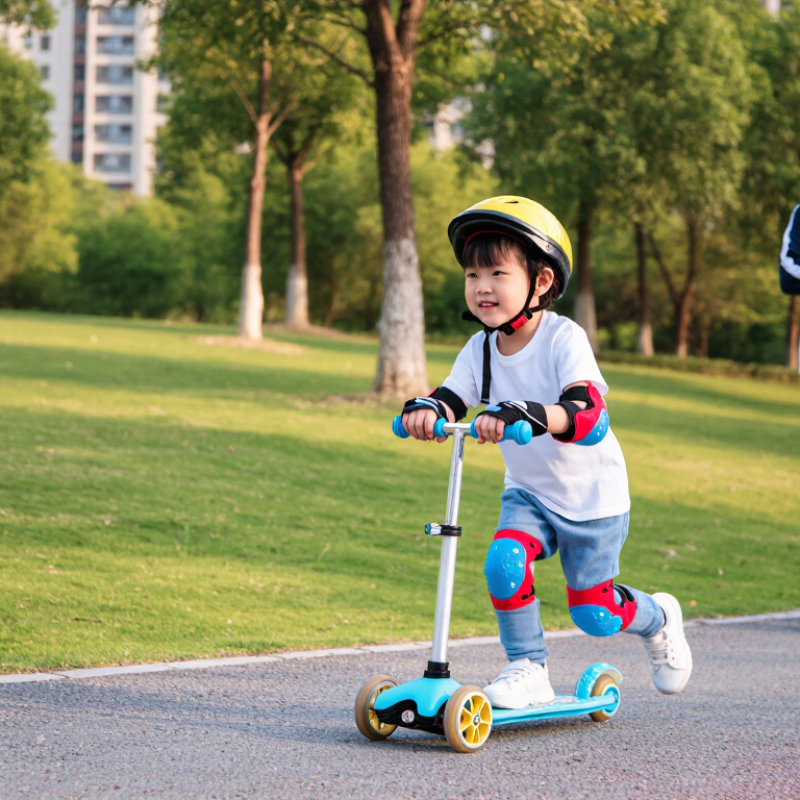
Riding a scooter gives children an enjoyable way to practise balance and coordination while being active outdoors.

Daily Physical Activity Recommendations

How to read this chart: For ages 3–4, the recommendation is at least 180 minutes of physical activity of any intensity across the day, including at least 60 minutes of moderate-to-vigorous activity. For ages 5–17, the recommendation is an average of at least 60 minutes of moderate-to-vigorous activity per day. These figures describe different measures and should not be directly compared. Scootering can be one option for active play; this chart does not measure scooter-specific effects.

Source: World Health Organization, Guidelines on Physical Activity, Sedentary Behaviour and Sleep for Children Under 5 Years of Age (2019) and Guidelines on Physical Activity and Sedentary Behaviour (2020).

What to Consider When Choosing a Junior Scooter

When choosing a junior scooter, match the deck and handlebar to the child, not just the age printed on a label. The rider should stand with both feet comfortably on the deck and hold the grips without reaching or shrugging. Fit matters most. Check the scooter’s weight, folding mechanism, and maximum load, too; a child may need to carry it up a few steps. Wheels matter. Larger wheels can roll more smoothly over cracks, while a dependable rear brake should be easy to press. Test it slowly.

Safety and riding conditions deserve equal attention. Look for documented testing against a recognized standard, such as ASTM F2264 for non-powered scooters, and inspect the steering, grips, and brake before each ride. A helmet that fits snugly is essential, even for short trips. The World Health Organization’s physical activity fact sheet reports that 81% of adolescents aged 11–17 did not meet activity recommendations, based on 2016 estimates. That figure does not prove scooters solve inactivity, but it highlights the value of enjoyable movement. Choose a flat, open practice area away from traffic. A sturdier scooter may feel reassuring, yet it can be awkward for a small child to carry; that trade-off is easy to overlook.

Why Choose a Junior Scooter for Kids? — What to Consider When Choosing a Junior Scooter
What to Consider What to Look For Why It Matters
Fit and handlebar height Choose a handlebar that adjusts to the child’s height, if available. The child should be able to hold it comfortably with slightly bent elbows while standing upright. A comfortable fit helps the child steer and maintain control. Age labels are only a starting point; children of the same age can differ in height and coordination.
Age and riding ability Check the manufacturer’s age guidance and consider the child’s balance, coordination, and experience. A three-wheel design is often easier for beginners to balance on than a two-wheel design. A scooter suited to the child’s current abilities can make early practice more manageable. Supervision is important, especially for younger or inexperienced riders.
Weight limit Confirm the stated maximum rider weight and compare it with the child’s current weight. Follow the product’s instructions rather than relying on a general estimate. Staying within the specified limit helps ensure the scooter is used as designed and can help avoid unnecessary strain on its parts.
Deck size and grip Look for enough standing space for the child’s feet and a non-slip deck surface. Check that the deck is not uncomfortably high off the ground. A stable, grippy standing area can make it easier to balance and push off. A lower deck may also make it easier to step on and off.
Wheels and terrain Smaller wheels are commonly used on scooters for smooth paths and paved surfaces. Larger wheels may roll more smoothly over minor surface irregularities, depending on the scooter design. Wheel size and material affect how a scooter rolls and handles. Choose a model intended for the surfaces where the child will ride, and avoid rough or uneven areas unless the scooter is designed for them.
Braking system Check that the brake is easy for the child to reach or operate and that it works as described in the instructions. Many kick scooters use a rear foot brake. Children need time and practice to learn how their scooter slows and stops. Test the brake in a clear, flat area before riding in busier places.
Weight and portability Choose a scooter the child or caregiver can lift and carry comfortably. If it folds, check that the folding mechanism locks securely and is operated as instructed. A manageable weight makes it easier to transport and store. A folding feature is useful only when it can be used safely and reliably.
Construction and condition Look for secure grips, firmly attached wheels, a stable steering column, and no sharp edges or loose parts. Recheck these areas regularly. Routine checks can help identify wear or looseness before a ride. Stop using the scooter if it is damaged or does not operate as intended.
Protective gear Use a properly fitted helmet and consider knee and elbow pads, especially while the child is learning. Follow local helmet requirements. Protective gear helps reduce the risk of injury in a fall. A helmet should fit snugly and be worn correctly on every ride.
Riding environment Start on a dry, smooth, flat surface away from traffic, steep slopes, and obstacles. Follow local rules about where scooters may be used. A predictable practice area gives a child room to learn starting, steering, and stopping before riding in more complex surroundings.

Note: Product features and suitable rider limits vary. Always check the scooter’s instructions, inspect it before use, and supervise children according to their age and ability.

ENQUIRE NOW
close
Get In Touch

Use the form below to drop us an email if you have any question or comments.