What Are the Top Types of Mining Trucks in 2026?

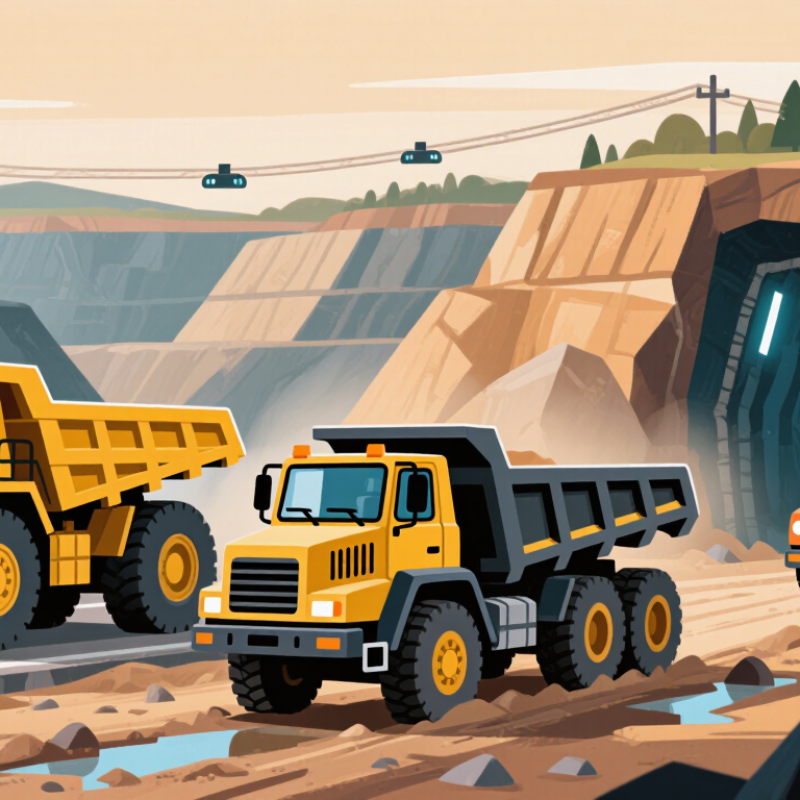
Mining Trucks are not one machine category. A surface mine may need rigid-frame haul trucks for long, heavy cycles, while smaller pits often favor articulated dump trucks on uneven, muddy roads. Underground operations rely on compact low-profile trucks that fit narrow drifts and tight turning areas. Electric-drive, trolley-assist, and autonomous models add further choices, but their value depends on site design and operating conditions.

The investment case is growing. The International Energy Agency’s Global Critical Minerals Outlook 2024 estimates that the market value of key energy-transition minerals could reach about US$770 billion by 2040 under its Announced Pledges Scenario. That forecast signals expanding pressure on mineral supply chains, not a direct forecast for truck sales. Equipment specifications offer a closer comparison: Caterpillar lists the 797F rigid haul truck at a 363-tonne payload, while Volvo lists the A60H articulated hauler at 55 tonnes. The gap is striking. It also shows why capacity alone can mislead.

A truck’s real performance depends on haul distance, road condition, grade, loading equipment, fuel or charging access, and maintenance support. A massive payload may look impressive on paper, yet cause bottlenecks if the loading fleet cannot keep pace. This guide compares the leading truck types expected to matter in 2026, with attention to their applications, strengths, and trade-offs. No single type wins every mine. The right choice is usually less obvious than a specification sheet suggests.
What Are the Top Types of Mining Trucks in 2026?

Mining Truck Classes by Payload Capacity and Operating Environment

Mining truck classes are practical payload bands, not a universal standard. Articulated trucks commonly carry about 25–45 tonnes and suit soft, wet ground, tight bends, and short mine roads. Mid-size rigid trucks, roughly 45–150 tonnes, work well on established haul roads and in smaller open pits. Large rigid trucks may carry 150–300 tonnes; ultra-class units exceed 300 tonnes and need wide, carefully maintained roads. The figures are indicative, since payload limits vary with body design, altitude, and site conditions.

Ground conditions change the useful payload. Articulated trucks can keep moving on uneven, muddy routes, while rigid trucks generally favor firm surfaces and longer hauls. Bigger is not always better. Oversized units can increase road wear and create slowdowns at loading areas. The International Energy Agency’s Global Critical Minerals Outlook 2024 reports that average copper ore grades have fallen by around 40% over roughly three decades, increasing the amount of material that may need moving for a given output. That trend makes matching payload to route, rolling resistance, and loading equipment more important than choosing the largest class. In practice, a wet ramp can overturn a neat spreadsheet. Check payload records against seasonal road conditions; the perfect class on paper may still be wrong in the field.

Rigid-Frame Haul Trucks: Caterpillar 797F Carries Up to 363 Tonnes

Rigid-frame haul trucks are built for large open-pit mines, where wide haul roads and steady loading cycles support high payloads. Some models can carry up to 363 tonnes in one trip. That is substantial. The actual rated payload depends on the truck configuration and operating conditions, so the headline figure should not replace the manufacturer’s specifications or site planning.

Their rigid chassis helps manage heavy loads on prepared roads, while large tyres and powerful braking systems are designed for demanding mine cycles. Operators still need to watch road condition, speed, tyre temperature, and braking performance. A loaded truck descending a long grade creates heat and stress; small changes in road upkeep can affect both cycle time and safety. Bigger is not always better. A mine must match truck capacity to its loading equipment, road layout, and maintenance resources.

Tips: Check payload records against scale data, and inspect haul roads after rain or blasting. Keep the loading pass balanced; uneven material can affect stability. It is tempting to focus on tonnes moved, but availability matters too. A truck waiting for repairs moves nothing, and that is an easy detail to underestimate.

Electric-Drive Haulers: Komatsu 980E-5 Has a 363-Tonne Payload

A 363-tonne payload puts an electric-drive hauler among the largest machines used in open-pit mines. That figure describes material carried, not the truck’s total operating weight. In a diesel-electric design, an onboard engine generates electricity for wheel motors; it is not automatically a battery-electric vehicle. The distinction matters when planners estimate fuel use, charging needs, and emissions.

At a loading face, each pass of a shovel can place several tonnes at a time, while the truck’s tires press deep tracks into the haul road. High payload can reduce trips, but only when loading, road conditions, and dumping capacity keep pace. Small delays add up. The International Energy Agency’s Global Critical Minerals Outlook 2024 reports that lithium demand grew about 30% in 2023, reflecting expanding demand for minerals and added pressure on mine productivity. Still, payload is not the whole story. A heavy hauler can consume substantial fuel on steep, uneven routes, and real-world efficiency depends on the full cycle—not its headline capacity alone. I would also question any comparison that ignores maintenance and idle time.

Top Types of Mining Trucks in 2026: Electric-Drive Haulers and the 363-Tonne Payload Class
Truck type Typical payload range Powertrain or configuration Typical application Key operating consideration
Ultra-class rigid-frame haul truck Approximately 300–400 metric tonnes; 363 tonnes is equivalent to 400 short tons Diesel-mechanical or diesel-electric; electric-drive versions use traction motors at the wheels High-volume open-pit mines with long, established haul roads Requires wide roads, large loading equipment and careful payload matching to avoid overloading.
Large rigid-frame haul truck Approximately 150–290 metric tonnes Diesel-mechanical or diesel-electric Open-pit mines seeking high capacity with more flexibility than the largest truck class Selection depends on haul distance, road gradient, loading-unit size and fleet availability.
Medium rigid-frame haul truck Approximately 90–150 metric tonnes Usually diesel-powered; mechanical and electric-drive designs are available Smaller open pits, mine development and operations with variable haul routes Can suit sites where ultra-class trucks would be constrained by road geometry or infrastructure.
Articulated dump truck Approximately 25–45 metric tonnes Diesel-powered, articulated chassis, typically with all-wheel drive Uneven, muddy or steep mine roads; construction and support work around mines Articulation and traction aid mobility, but payload is substantially below that of rigid mine haulers.
Underground haul truck Approximately 10–65 metric tonnes Diesel or battery-electric, depending on model and mine infrastructure Moving ore through underground declines and drifts Low profile, turning radius, ventilation requirements and tunnel dimensions are critical constraints.
Trolley-assist haul truck Commonly in large or ultra-class payload categories; capacity varies by truck configuration Electric-drive truck supplied with power from overhead lines on equipped road sections Open-pit haul routes with sustained uphill sections and suitable electrical infrastructure Can reduce diesel use on connected uphill segments; benefits depend on route design and trolley coverage.

Payload figures are indicative class ranges, not specifications for a particular truck. Actual rated payload and operating limits vary by configuration, region and site conditions. “Electric-drive” describes the propulsion system; it does not by itself determine a truck’s payload capacity.

Articulated Dump Trucks: Caterpillar 745 Carries Up to 41.7 Tonnes

Articulated dump trucks are built for haul roads that change from firm gravel to soft, uneven ground. A payload of up to 41.7 tonnes makes this class suitable for moving large loads between an excavation face and a processing area. The “up to” matters: actual capacity depends on the truck’s configuration, material density, and site conditions. Wet soil can weigh far more than a loose bucket of dry rock.

The central articulation joint helps the front and rear sections follow turns and irregular terrain. Large tires and a flexible chassis can support traction on rough routes, while a broad dump body helps discharge material at the tip area. Still, turning room, road width, and ground bearing strength need careful checks. A full load is not forgiving.

Operators should match each truck to the haul distance and daily cycle, not just its headline payload. Loading evenly can help maintain stability and reduce unnecessary strain on tires. Small details matter. A poorly maintained road can slow even a capable machine, and the largest truck is not always the most efficient choice. I’d also question estimates based only on ideal conditions; real sites rarely stay ideal for long.

Articulated Dump Truck Payload Capacity Examples

Published payload ratings for representative articulated dump trucks, shown in metric tonnes.

What this shows: Payload ratings span roughly 24 to 42 tonnes in these examples. Actual capacity depends on the truck’s configuration and operating conditions.

Underground Haulers: Sandvik TH663i Carries Up to 63 Tonnes

What Are the Top Types of Mining Trucks in 2026?

Underground Haulers: Carries Up to 63 Tonnes

In 2026, underground haulers remain essential where narrow routes and steep ramps limit larger surface trucks. A machine rated for up to 63 tonnes can move substantial loads between a loading point and the underground dump. That figure refers to payload, not total vehicle weight. Actual output depends on the route, material, loading practice, and site conditions. A truck may look powerful on paper, but a tight turn or rough floor can slow every cycle.

Tips: Check tunnel width, ramp grade, turning space, and ventilation before choosing a high-capacity hauler. Match the truck to the route, not just the headline payload. Keep a small safety margin.

Operators should also consider visibility, braking performance, tire condition, and access for maintenance. A full load puts real demands on the drivetrain and brakes, especially on long descents. Regular inspections can help catch wear before it disrupts production. Still, no specification replaces experienced operators and careful route planning. Even good planning misses something now and then. A short test run on the actual haul road can reveal awkward corners, loose floor material, or loading delays that a site drawing may not show.

ENQUIRE NOW
close
Get In Touch

Use the form below to drop us an email if you have any question or comments.