China has become a major sourcing base for Shower Glass, supplying hotel projects, residential renovations, and prefabricated bathrooms worldwide. Its factories commonly offer tempered panels, laminated options, low-iron glass, nano-coatings, and customized hardware. Still, a polished catalog does not prove dependable production.
Grand View Research estimates that the global shower doors market reached approximately USD 3.7 billion in 2023. Its report also identifies renovation activity, urban housing, and premium bathroom upgrades as important growth drivers. Fortune Business Insights reports similar expansion, although market definitions differ between shower doors, enclosures, and glass panels. That difference deserves attention.
For global buyers, supplier selection should move beyond price. Factory audits, tempering records, edge-finishing samples, coating tests, packaging methods, and replacement policies reveal more. A 10-millimeter panel may look perfect in a showroom, yet a poorly protected corner can fail during container handling.
Glass-processing consultant Dr. Helen McArthur offers a useful warning: “Safety begins with consistency, not appearance.” This principle fits Shower Glass purchasing well. Reliable manufacturers should demonstrate stable furnace temperatures, documented inspection steps, and traceable batch records.
The shortlist in this guide focuses on Chinese manufacturers with export experience, technical capability, customization support, and clearer quality evidence. Some suppliers communicate beautifully but document little. Others provide strong testing data but weaker installation guidance. Buyers should question both.
That is the uncomfortable part.
A practical decision should compare verified performance, not attractive photographs. It should also consider local building standards, installer skill, delivery distance, and after-sales response. These details often decide whether a Shower Glass project feels premium—or becomes an expensive repair.
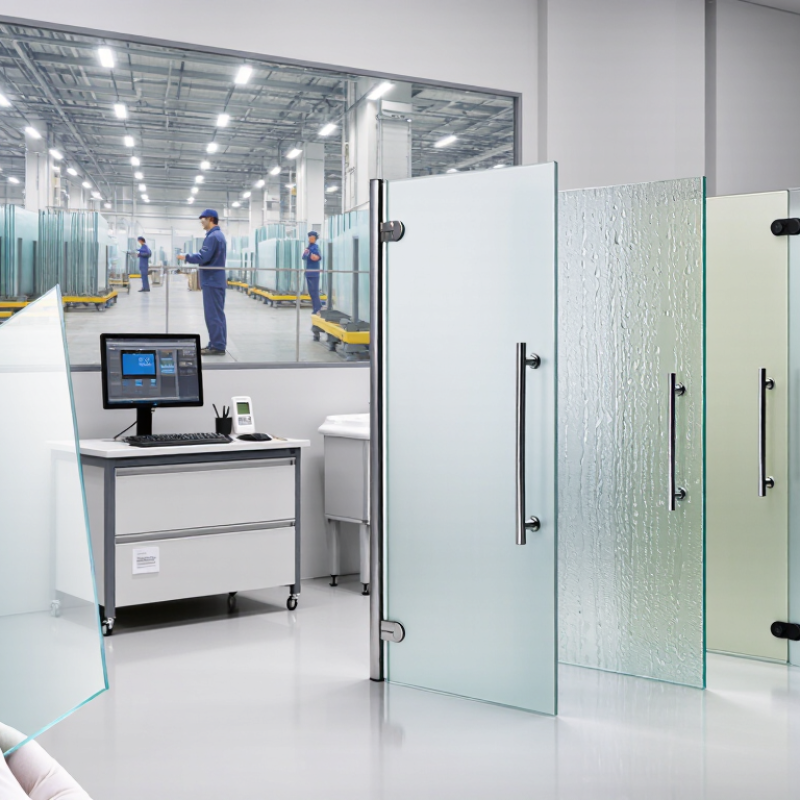
China’s shower glass manufacturing landscape combines large-scale production with increasingly precise customization. Many factories process tempered glass from 6 to 12 millimeters thick. They use CNC cutting, polished edges, drilled holes, and controlled heat treatment. Common products include frameless doors, sliding enclosures, fixed panels, and corner systems. Experienced manufacturers can match drawings, hardware positions, and packaging requirements for international projects.
Production quality depends on more than modern machinery. Skilled workers must inspect edge smoothness, dimensions, glass clarity, and hardware alignment. Reliable suppliers usually maintain documented inspection records and provide test evidence for relevant safety standards. Buyers should also examine packing methods, especially corner protection and moisture resistance during long-distance shipping. A polished catalog can hide weak process control. No factory is perfect. That reality deserves honest discussion.
Tips: Request recent production photos, sample measurements, and a small trial order. Confirm glass thickness, tolerance, certification, and replacement procedures in writing. Ask how rejected panels are handled. Factory visits can reveal details that videos miss, such as dust levels, storage habits, and inspection routines. Communication may still become slower during busy seasons, so clear drawings and approved samples are essential. A cheaper quotation is not always a lower total cost. Shipping damage, inconsistent drilling, or delayed replacements can quickly change the calculation.
For global buyers, shower glass selection starts with safety, not appearance. Tempered glass remains the common choice because heat treatment increases its resistance to thermal shock and impact. Typical panels measure 6, 8, or 10 mm in thickness. According to Grand View Research’s 2024 flat glass report, construction remains a major demand sector, supported by renovation and new housing activity. That trend does not make every panel suitable for wet rooms.
Clear tempered glass offers maximum light transmission. Low-iron glass gives a cleaner, less green edge. Frosted, acid-etched, and patterned glass improve privacy, but their surface textures can collect mineral deposits. Laminated glass uses an interlayer between two sheets. It can remain partially bonded after breakage, although it is heavier and usually costs more. For high-end enclosures, buyers should request visible-light transmission, color consistency, and coating durability data.
Small details matter. Ask for polished or seamed edges, hole-position tolerances, flatness limits, and compatible hardware loads. A reliable factory should provide heat-soak testing options, tempering records, and compliance documents for standards such as EN 12150 or ANSI Z97.1. SGS and Intertek market reports repeatedly identify quality verification as a purchasing concern in international building materials. Still, paperwork is not enough. I would inspect sample corners, coating uniformity, and packaging before approving a large order. Some specifications look precise, yet installation conditions remain poorly considered.
| Shower Glass Type | Typical Thickness | Glass Composition and Appearance | Safety and Performance | Common Edge Finish | Typical Applications | Available Processing Options | Key Purchasing Specifications |
|---|---|---|---|---|---|---|---|
| Clear Tempered Glass | 6 mm, 8 mm, or 10 mm | Low-iron or standard clear float glass with high light transmission and a neutral appearance. | Heat-treated safety glass that breaks into relatively small, blunt fragments rather than large sharp shards. | Arrissed, flat-polished, or pencil-polished edges. | Frameless shower doors, fixed panels, corner enclosures, and hinged door systems. | CNC drilling, cut-outs, notches, water-jet cutting, logo marking, and customized shapes. | Confirm glass thickness, flatness, hole position, dimensional tolerance, tempering quality, and compliance with the destination-market safety standard. |
| Low-Iron Tempered Glass | 6 mm, 8 mm, or 10 mm | Extra-clear glass with reduced iron content, producing a brighter appearance and less green tint than standard clear glass. | Tempered safety performance with improved color clarity and a premium visual effect. | Flat-polished or pencil-polished edges. | Luxury frameless enclosures, minimalist bathrooms, display-style shower spaces, and high-visibility panels. | Precision drilling, hinge cut-outs, radius corners, custom shapes, and surface coatings. | Specify visible-light clarity, iron-content range, thickness, color consistency, edge quality, and allowable optical distortion. |
| Laminated Safety Glass | Commonly 6.38 mm, 8.38 mm, or 10.38 mm total thickness | Two glass layers bonded with a polymer interlayer, commonly PVB or a similar safety interlayer. | When damaged, the interlayer helps retain broken glass fragments and improves post-breakage integrity. | Flat-polished or arrissed edges; exposed edges require suitable sealing and handling. | Specialized shower partitions, designs requiring fragment retention, and projects with enhanced safety requirements. | Drilling and cutting must generally be completed before lamination; decorative interlayers and colored effects may be available. | Confirm interlayer type, total thickness, moisture resistance, edge protection, delamination resistance, and local code acceptance. |
| Clear Laminated and Tempered Glass | Commonly 10.76 mm or 12.76 mm total thickness | Tempered glass layers combined with a safety interlayer for higher structural and post-breakage performance. | Combines tempered-glass strength with laminated fragment retention; suitable only when the hardware system is designed for the weight. | Polished edges with carefully controlled corner and hole finishing. | Large-format panels, premium partitions, and projects requiring enhanced safety specifications. | Custom holes, notches, shapes, screen printing, and selected decorative interlayers. | Check total weight, hardware load rating, interlayer compatibility, maximum panel dimensions, and installation requirements. |
| Frosted Tempered Glass | 6 mm, 8 mm, or 10 mm | Acid-etched or surface-treated glass with a translucent matte finish that diffuses light and increases privacy. | Tempered safety glass with reduced visibility through the panel; surface treatment may require careful cleaning. | Flat-polished, pencil-polished, or arrissed edges. | Privacy shower doors, bathroom partitions, hotel bathrooms, and residential enclosures. | Patterns, bands, custom opaque areas, digital printing, drilling, cut-outs, and protective treatments. | Specify translucency, pattern location, etched-side orientation, fingerprint resistance, cleaning instructions, and color uniformity. |
| Patterned or Textured Tempered Glass | Commonly 6 mm or 8 mm | Surface texture or molded pattern that provides privacy, decorative interest, and light diffusion. | Tempered safety glass; texture can reduce visual clarity and may influence cleaning requirements. | Polished or arrissed edges, depending on the design and hardware. | Decorative shower doors, partial privacy panels, hospitality projects, and feature bathrooms. | Cut-to-size processing, drilling, edge polishing, screen printing, and selected custom patterns. | Confirm pattern direction, texture depth, privacy level, light transmission, cleaning method, and minimum order requirements. |
| Tinted Tempered Glass | 6 mm, 8 mm, or 10 mm | Body-tinted glass, often available in gray, bronze, or other architectural shades, depending on production capability. | Tempered safety glass that provides glare reduction and a darker decorative appearance. | Flat-polished or pencil-polished edges. | Contemporary bathrooms, hotel interiors, coordinated architectural spaces, and colored design schemes. | Drilling, cut-outs, custom shapes, screen printing, and selected easy-clean coatings. | Specify tint shade, visible-light transmission, color tolerance, thickness, surface quality, and sample approval procedure. |
| Ultra-Clear Coated Glass | Usually 6 mm, 8 mm, or 10 mm | Clear or low-iron glass with a hydrophobic or easy-clean surface coating designed to reduce water-spot adhesion. | Safety performance depends on the base glass, which is commonly tempered; coating improves maintenance characteristics rather than impact strength. | Polished or arrissed edges. | Frameless enclosures in areas with hard water, premium residential bathrooms, hotels, and commercial projects. | Cutting, drilling, polishing, custom shapes, and coating applied before or after selected fabrication stages. | Confirm coating durability, coating-side identification, chemical resistance, warranty terms, cleaning limitations, and glass safety certification. |
| Printed or Digitally Decorated Tempered Glass | Commonly 6 mm or 8 mm | Tempered glass with ceramic frit, digital patterns, bands, gradients, or custom decorative graphics. | Heat-resistant ceramic decoration is generally durable when correctly processed and fired; final safety performance comes from tempering. | Polished or arrissed edges. | Custom residential bathrooms, hotels, spas, branded interior concepts, and privacy partitions without using company logos. | Color matching, gradient printing, masking, drilling, notches, custom shapes, and repeat-pattern production. | Specify artwork format, color reference, print resolution, coverage area, pattern repeat, viewing direction, and sample approval. |
| Curved Tempered Glass | Commonly 6 mm or 8 mm | Heat-bent glass formed to a specified radius or three-dimensional profile. | Tempered safety glass with geometry-dependent strength and tighter production tolerances than flat panels. | Polished edges where accessible; edge treatment depends on the mold and final design. | Rounded shower enclosures, curved corner units, spa interiors, and custom architectural bathrooms. | Radius forming, drilling before tempering, custom edge work, and coordinated hardware cut-outs. | Provide radius, arc length, height, glass thickness, hole locations, allowable distortion, mold requirements, and packaging method. |
| Shower Glass with Protective Film | Base glass commonly 6 mm, 8 mm, or 10 mm tempered glass | Safety glass supplied with a transparent safety or protective film on one surface or as specified for the project. | Film can help hold fragments after breakage, but it does not replace required tempered or laminated safety performance. | Polished or arrissed edges, with film carefully trimmed away from exposed edges when required. | Projects requesting additional fragment retention, renovation work, and selected commercial installations. | Drilling and cutting before film application, custom shapes, printed film, and edge finishing. | Confirm film thickness, adhesion, UV resistance, moisture performance, replacement method, edge compatibility, and relevant code requirements. |
Specification note: Thicknesses, dimensions, coatings, colors, and processing capabilities vary by project and supplier. Final selection should be verified against the applicable building and safety standards in the destination market.
Top Shower Glass Manufacturers in China for Global Buyers
How to Evaluate Shower Glass Manufacturers in China
Evaluating shower glass manufacturers requires more than comparing online prices. Request factory photos, production flow videos, and recent inspection records. Check whether the facility cuts, tempers, prints, and packs glass under controlled procedures. A clean workshop matters.
Ask for glass thickness options, edge-finishing details, hole-position tolerances, and test reports. Tempered glass should meet recognized safety requirements, such as EN 12150 or ANSI Z97.1, when applicable to your market. Confirm whether reports match the actual product, not an older sample. This detail is often overlooked. Request a physical sample before placing a large order. Inspect the edges under bright light. Look for chips, uneven polishing, roller marks, and coating gaps. Measure the thickness with a calibrated gauge. Small errors can complicate installation.
Reliable suppliers explain their quality-control checkpoints clearly. They should provide batch numbers, packing photographs, replacement procedures, and realistic production schedules. Ask how they protect corners during export; cardboard alone may not prevent breakage. Wooden crates, separators, and moisture control are practical details. Communication also reveals expertise. A capable technical team will question unclear drawings instead of accepting every measurement. No factory is perfect. One supplier may offer excellent glass but weak packaging, while another may communicate well yet lack flexible customization. Record these weaknesses honestly, then judge their effect on safety, cost, and delivery. Factories that welcome audits and transparent corrections usually deserve closer consideration.
For global buyers, shower glass quality begins with verifiable standards, not attractive photographs. Tempered glass should meet EN 12150, ANSI Z97.1, or CPSC 16 CFR 1201 requirements, depending on the destination market. These standards cover impact resistance, fragmentation, and safe breakage. Laminated options require different testing and documentation.
Serious manufacturers should provide batch records, glass thickness reports, and heat-treatment results. Ask for impact-test conditions, not only pass certificates. Edge quality also matters. Tiny chips around drilled holes can become failure points during installation. EN 14428 adds requirements for shower enclosures, including durability, water retention, and functional performance. Testing should reflect real use, including repeated door movement and hardware loading.
Factory systems deserve equal attention. The 2023 ISO Survey reported 1,265,216 ISO 9001 certificates worldwide, but ISO 9001 does not automatically prove product safety. It shows a controlled management system. Buyers should still review calibration records, inspection plans, and corrective-action reports. Certification scope must include the relevant manufacturing site.
Request independent laboratory reports when possible. Check laboratory accreditation under ISO/IEC 17025 and confirm report numbers with the issuing body. A certificate alone is not proof. I have seen specifications that looked complete but omitted coating adhesion and post-installation tolerances. That gap deserves scrutiny, especially for large panels, frameless doors, and humid coastal projects.
Reliable sourcing starts with factory verification, not a polished website. Experienced buyers should check cutting accuracy, tempering records, edge finishing, and packaging tests. China remains a major manufacturing base, but quality can vary between production lines. The World Bank’s Logistics Performance Index 2023 placed China 19th globally, with a score of 3.7. This suggests strong logistics capacity, although port congestion and inland delivery still require planning.
Pricing depends on glass thickness, hardware, coating, custom shapes, and order volume. A low quotation may exclude crates, inspection, insurance, or destination charges. Drewry’s World Container Index has shown that container freight prices can change sharply during disruptions. Therefore, request both FOB and delivered-cost quotations. Confirm the quotation period. It matters. Ask manufacturers for EN 12150 or equivalent tempering evidence, batch traceability, and breakage procedures. Buyers should also review the UNCTAD Review of Maritime Transport for wider shipping risks. My practical concern is simple: many comparisons ignore packaging strength until panels arrive damaged.
Tips: Use moisture-resistant export crates, corner protection, and shock indicators. Request loading photographs and a signed packing list. Compare at least three factories using the same specification sheet. Allow a small replacement budget, because even careful transport can produce occasional losses. A pre-shipment inspection is usually cheaper than a delayed installation.
Are you still planning to build your shipping container home this year? How about you could save up to $5,000 in delivery costs towards your project?
With the Tiny Home Expos in Brisbane, Adelaide and Canberra in the coming months, we are offering FREE DELIVERY (*up to $5000) to each state the Expo is in, in exchange with using your project as a display at the show. Offer expires 8 weeks before each Expo and limited to ONE project per Expo ONLY so reach out to us now to secure your spot!
Enquire Now