Top 10 Bunk Bed Frame Suppliers for Global Buyers
Choosing the right Bunk Bed Frame supplier requires more than comparing catalog prices. Global buyers need dependable construction, consistent quality, and clear communication from the first inquiry.
This guide introduces ten suppliers serving international markets. They were considered through practical factors, including manufacturing experience, material quality, certifications, production capacity, and export support. A reliable supplier should explain whether each frame uses steel, solid wood, or engineered board. Product details should also identify load limits, mattress dimensions, guardrail height, ladder design, and surface treatment.
Small details matter. A welded joint should look even, without sharp edges or visible gaps. A wooden frame should feel stable when assembled, not simply attractive in product photographs. Packaging deserves equal attention. Strong corner protection, labeled parts, and readable instructions can reduce damage and installation errors.
The selected companies may differ in factory scale, pricing, customization options, and lead times. Some may serve hotels and dormitories, while others focus on retailers or home furniture brands. Their strengths are not identical. A supplier with advanced equipment may still provide weak after-sales support. A smaller factory may offer better customization, but require closer quality supervision.
Buyers should request current test reports, factory videos, samples, and written warranty terms before placing large orders. Local safety requirements can also vary by destination, so independent verification remains important. No ranking can replace careful due diligence. That is an uncomfortable limitation, but it protects purchasing decisions.
With these points in mind, the following supplier overview offers a practical starting point for comparing manufacturers and identifying a suitable long-term partner.
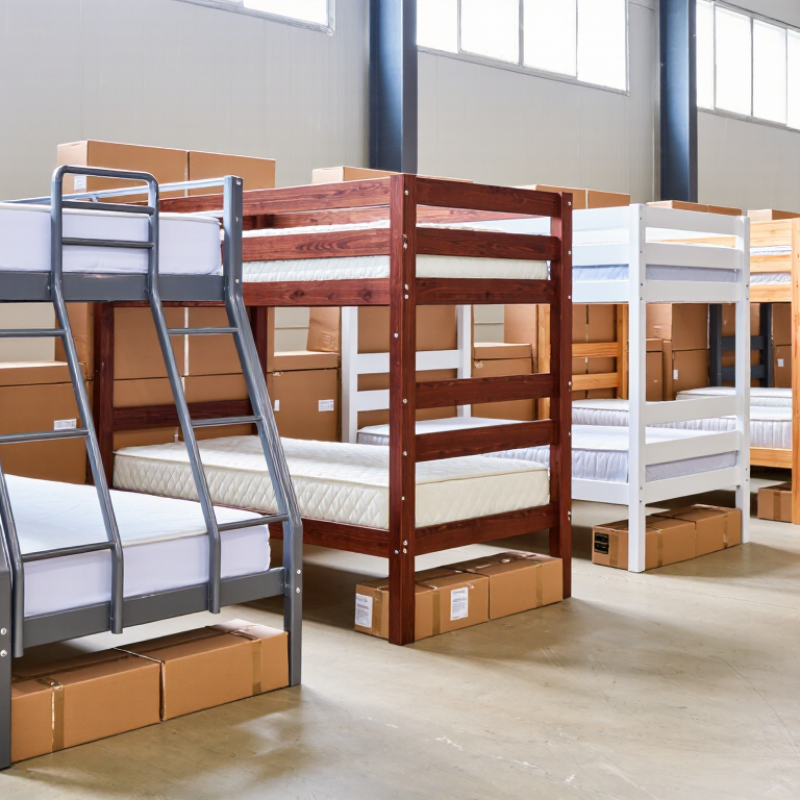
Bunk Bed Frame Suppliers: Scope, Types, and Global Market Roles
Bunk bed frame suppliers serve more than a purchasing function. They connect steel or solid-wood production with hospitality, student housing, rental, and retail channels. Their scope may include design, prototyping, load testing, packaging, and after-sales replacement parts. Some only manufacture frames. Others coordinate mattresses, ladders, guardrails, and installation guides.
According to Fortune Business Insights, the global furniture market reached about US$516.66 billion in 2023. The report projects approximately US$780.43 billion by 2032. This data covers furniture broadly, not bunk frames, so buyers should avoid treating it as a precise niche forecast. IMARC Group’s bunk bed market analysis identifies compact housing and shared accommodation as important demand drivers. Fit matters. Room height, ladder position, and guardrail clearance can change a whole order.
For global buyers, supplier types often include factory-direct exporters, contract manufacturers, regional wholesalers, and design-led specialists. Each has a different market role. Factory exporters may offer lower unit costs and flexible finishes, while wholesalers usually provide faster local delivery. A serious shortlist should check test reports, material traceability, production capacity, carton drop results, and replacement-part policies. UN Comtrade places many furniture products under HS 9403, but this code does not isolate bunk frames. Classification can therefore distort trade comparisons. That gap deserves caution. In practice, the cheapest quote may hide thicker packaging, higher defect rates, or slower claims handling. Experienced buyers should request recent production evidence, not polished promises.
Bunk Bed Frame Supplier Market Scope by Common Mattress Configuration
The chart compares the nominal mattress width and length commonly used in major bunk bed frame configurations. Twin, Twin XL, and Full dimensions are standard U.S. mattress measurements; actual frame dimensions vary by manufacturer, guardrails, ladders, and safety clearances.
These configurations help global buyers evaluate suppliers serving residential, student housing, hospitality, military, and space-saving furniture markets.
Profiles of Ten Leading Bunk Bed Frame Suppliers
Top 10 Bunk Bed Frame Suppliers for Global Buyers
Profiles of Ten Leading Bunk Bed Frame Suppliers
A factory-direct specialist suits buyers seeking competitive pricing and custom dimensions. Its workshop should show cutting, welding, and powder-coating processes. A metal-frame supplier often provides strong steel tubes, reinforced joints, and repeatable production. Ask for load-test records, not only product photos.
A solid-wood supplier may offer pine, rubberwood, or engineered timber frames. Inspect moisture control and surface finishing carefully. A contract furniture producer can manage larger hospitality orders with coordinated packaging and delivery schedules.
A children’s furniture specialist focuses on guardrail height, ladder spacing, and rounded edges. These details matter. A modular supplier offers detachable beds, storage stairs, and replacement components. This can reduce long-term maintenance costs. A flat-pack expert designs cartons around standard container space. Check assembly instructions with a real sample.
A custom engineering supplier supports unusual room sizes, higher clearance, or reinforced weight requirements. Its drawings should include measurements, materials, and tolerance notes.
A wholesale distributor may combine several frame styles, helping buyers test different markets before placing larger orders.
A safety-focused supplier should provide material declarations, inspection reports, and clear test methods. Requirements vary by destination, so buyers must verify current local standards independently. An export-oriented supplier may handle labeling, moisture protection, and multilingual documents. Confirm these services in writing.
During factory visits, I would check weld consistency, bolt alignment, carton strength, and finish defects. One overlooked corner can affect many units. Supplier claims are useful, but physical samples reveal weaknesses that brochures hide. Loose ladder fittings and thin guardrails remain concerns worth questioning.
Comparison of Products, Certifications, Prices, and Production Capacity
Top 10 Bunk Bed Frame Suppliers for Global Buyers
Comparing ten bunk bed frame suppliers requires more than checking catalog photos. Product structure matters. Steel frames often suit budget projects and frequent relocation, while solid wood models provide warmer interiors and stronger visual appeal. Check weld quality, ladder grip, guardrail height, mattress support spacing, and hardware replacements. A frame that looks stable can still produce movement after repeated assembly.
Certifications need careful verification. Ask for current EN 747 or ASTM F1427 test reports, depending on the destination market. ISO 9001 may indicate controlled processes, but it does not prove product safety alone. FSC documentation can support responsible wood sourcing. Request reports showing the exact model, test date, laboratory, and factory address. Documents copied without matching details should raise concerns.
Wholesale prices commonly vary from about 80 to 300 US dollars per frame before freight, packaging, and duties. Lower prices may reflect thinner steel, simpler coatings, or limited quality inspection. They are not always better. Reported production capacity ranges from roughly 500 to 10,000 units monthly among established suppliers, but capacity claims need evidence. Review lead times, sample consistency, carton drop-test results, and spare-part policies. My own comparison would give more weight to stable repeat orders than impressive factory tours. That judgment is imperfect, especially when seasonal demand changes quickly. Ask for a small trial order.
Import, Compliance, and Logistics Considerations for Global Buyers
Top 10 Bunk Bed Frame Suppliers for Global Buyers
Importing bunk bed frames requires more than comparing factory prices. Global buyers should examine product experience, compliance records, and delivery control. A reliable supplier can provide material specifications, welding details, load-test reports, and stable quality across repeated orders. Ask whether the frame matches relevant destination standards, such as EN 747 or ASTM F1427 requirements. Standards differ by market, so local verification remains essential.
Check steel thickness, guardrail height, ladder spacing, mattress support, and coating performance. Request recent inspection documents, not recycled files. Packaging also matters. A poorly protected corner can arrive scratched after a long sea journey. Confirm carton dimensions, container loading plans, pallet rules, and replacement procedures before signing. Customs documents should clearly state product descriptions, quantities, materials, and country of origin.
Tips: Order a production sample before placing a large shipment. Photograph hidden welds and screw fittings. Test assembly with ordinary tools. Ask for a packing video showing corner protection and label placement. Keep a written tolerance agreement. It may feel excessive, but small differences can create costly disputes. I have seen buyers focus on unit price and overlook port storage charges, inspection delays, or missing hardware. That approach needs rethinking. A cheaper frame is not cheaper when installation teams wait for spare parts. Build a supplier scorecard covering compliance, communication, defect handling, lead time, and total landed cost. Review it after every shipment.