Top 10 Rail Component Manufacturers Worldwide

Rail systems are entering a period of steady technical renewal. The UNIFE World Rail Market Study 2024 reports continued growth in the global rail supply market, supported by fleet modernization, urban transit investment, and digital infrastructure. This growth creates demand for reliable Rail Component suppliers, not only complete train builders.

A component may look small on a factory floor. A brake disc, traction converter, axle bearing, or signaling module can determine safety, availability, and maintenance cost. The International Union of Railways (UIC) continues to emphasize lifecycle performance, interoperability, and resilient railway operations in its technical publications. These priorities make supplier evaluation more complex than comparing annual revenue.

This ranking examines ten influential manufacturers worldwide. It considers product breadth, engineering capability, international certifications, installed references, and after-sales support. Public company reports, UNIFE market research, UIC guidance, and transportation-industry disclosures provide the main evidence base. Production scale matters. So does performance in harsh conditions, from winter depots to crowded metro tunnels.

The comparison is not perfectly simple. Some companies disclose detailed segment figures, while others combine rail revenue with aerospace, energy, or industrial operations. That limitation deserves attention. A large corporation is not automatically the strongest specialist. Field reliability, replacement availability, and documented testing may matter more than headline size.

The manufacturers below represent different strengths, including braking systems, propulsion, bogies, wheels, couplers, onboard electronics, and signaling equipment. Together, they show how modern rail performance depends on thousands of precisely engineered interfaces. Small parts carry large responsibilities.
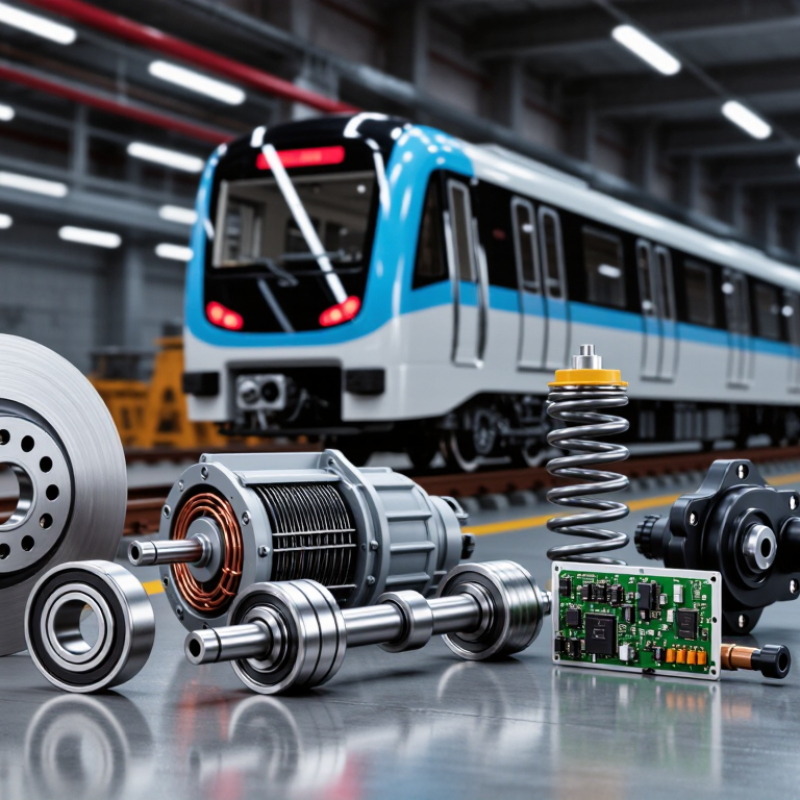
Top 10 Rail Component Manufacturers Worldwide

Industry Scope and Role of Rail Component Manufacturers

The global rail component industry covers the parts that keep passenger and freight networks moving safely. Manufacturers produce braking systems, bogies, wheelsets, couplers, traction motors, doors, HVAC units, sensors, and signaling equipment. Each component must work under vibration, dust, heat, moisture, and repeated mechanical stress.

Their role extends beyond supplying replacement parts. Manufacturers support design, testing, certification, installation, maintenance, and lifecycle improvement. A wheelset may require dimensional checks, ultrasonic inspection, and precise balancing before entering service. Brake components need reliable performance during heavy rain, steep gradients, and emergency stops. Control systems must exchange accurate data with onboard and trackside equipment.

Rail operators also depend on stable supply chains and consistent technical documentation. A delayed bearing or unavailable door actuator can keep an entire train out of service. Quality teams therefore review material records, factory testing, field failures, and maintenance feedback. Small defects matter.

Standards guide much of this work, but compliance alone does not guarantee practical reliability. Real operating conditions often expose weaknesses that laboratory tests miss. No manufacturer gets every design decision right. Field lessons can be uncomfortable. The strongest producers investigate failures openly, improve traceability, and adapt components for different climates, axle loads, and service patterns. This makes rail component manufacturers essential partners in safer, more efficient, and more maintainable railway systems.

Top 10 Rail Component Manufacturers Worldwide - Industry Scope and Role of Rail Component Manufacturers
Rank Anonymized Manufacturer Profile Primary Component Scope Main Rail Segment Core Industry Role Common Compliance Frameworks Typical Global Market Coverage
1 Tier 1 – Traction Systems Specialist Traction motors, converters, inverters, propulsion control equipment High-speed, metro, regional and locomotive Converts electrical energy into controlled train movement and supports energy-efficient operation IEC 61373, IEC 62497-1, EN 50155, EN 50163 Europe, Asia-Pacific, North America and selected emerging rail markets
2 Tier 1 – Braking Technology Specialist Pneumatic brakes, electro-pneumatic systems, brake controls and friction materials Passenger, freight, metro and light rail Provides train stopping, speed regulation and fail-safe braking functions EN 16185, EN 13452, UIC braking rules, applicable national safety approvals Worldwide, with strong participation in established passenger and freight networks
3 Tier 1 – Rail Control and Signalling Specialist Interlocking systems, train detection, signalling software and traffic management Mainline, high-speed, urban and freight rail Controls train separation, route safety, network capacity and operational reliability EN 50126, EN 50128, EN 50129, IEC 62290, ERTMS specifications Europe, Asia-Pacific, the Middle East, North America and Latin America
4 Tier 1 – Bogie and Suspension Specialist Bogie frames, wheelsets, axles, suspension and steering components High-speed, passenger, metro and freight Supports vehicle stability, ride comfort, load transfer and wheel–rail interaction EN 13749, EN 13260, EN 13261, EN 13262, EN 14363 Major rail-manufacturing regions and international rolling-stock programs
5 Tier 1 – Rail Door and Access Systems Specialist Passenger doors, door controls, steps, ramps and platform interface equipment Metro, commuter, regional and high-speed Enables safe boarding, controlled passenger flow, accessibility and emergency egress EN 14752, EN 50155, EN 50126, EN 45545-2 Europe, Asia-Pacific, North America and urban rail projects worldwide
6 Tier 1 – Coupler and Gangway Specialist Automatic couplers, draft gear, buffers, gangways and train-connection systems Passenger, freight, metro and locomotive Connects vehicles mechanically and supports electrical, pneumatic and passenger passage interfaces EN 16019, EN 15551, EN 15020, UIC coupling requirements Cross-border rolling-stock markets and large fleet modernization programs
7 Tier 1 – Track and Turnout Equipment Specialist Rail fasteners, turnout systems, switch machines, crossings and track components Mainline, high-speed, heavy haul and urban rail Maintains track geometry, route selection, load distribution and rail network safety EN 13481, EN 13232, EN 13674, AREMA or equivalent national standards Europe, Asia-Pacific, North America, Australia and mining corridors
8 Tier 1 – Onboard Electronics and Passenger Information Specialist Train communication networks, displays, public-address systems and onboard diagnostics Metro, commuter, regional and high-speed Delivers passenger information, condition monitoring, connectivity and operational data EN 50155, IEC 61375, EN 50159, EN 45545-2 Urban rail systems and passenger-rail fleets across developed and emerging markets
9 Tier 1 – HVAC and Thermal Management Specialist Heating, ventilation, air-conditioning, refrigeration and thermal control units Passenger, metro, regional and high-speed Maintains passenger comfort, equipment temperature and vehicle environmental quality EN 13129, EN 14750, EN 14813, EN 45545-2 Climate-diverse rail markets, including hot, cold and high-humidity regions
10 Tier 1 – Interior, Seating and Safety Materials Specialist Passenger seats, interior modules, flooring, lighting and fire-safe materials Passenger, metro, regional and intercity rail Improves passenger comfort, accessibility, maintainability and interior fire performance EN 45545-2, EN 16584, EN 14752, applicable accessibility regulations Passenger-rail refurbishment, new-build fleets and urban transit projects worldwide
Industry scope reflects internationally recognized rail component categories and commonly applied technical standards. The manufacturer profiles are anonymized to present market roles without displaying company or brand names.

Criteria for Comparing Global Rail Component Suppliers

Top 10 Rail Component Manufacturers Worldwide

Criteria for Comparing Global Rail Component Suppliers

Selecting a rail component supplier requires more than comparing catalog prices. UNIFE’s World Rail Market Study 2024 values the global rail market at about €201.8 billion annually. This scale increases pressure on quality, capacity, and long-term support. Compare suppliers through verified delivery records, failure rates, warranty response, and spare-part availability. A component should survive vibration, temperature changes, dust, and repeated braking cycles. Request test certificates, inspection records, and sample units before approval. ISO 22163 certification can support quality assessment, but certification alone proves little without independent audits.

Lifecycle cost deserves equal attention. A cheaper door system may create higher maintenance costs after five years. Examine energy use, repair hours, replacement intervals, and technician training. The IEA’s Future of Rail report notes that rail carries roughly 8% of global passenger travel while producing about 2% of transport emissions. Efficient components can strengthen this advantage, especially in traction, braking, and climate-control systems. Environmental evidence should include material traceability and measurable energy data. Marketing language is not evidence.

Tips: Build a weighted scorecard before contacting suppliers. Give quality and safety greater weight than purchase price. Check two customer references from similar climates. Ask how quickly critical parts can be delivered. A polished presentation can still hide weak after-sales support. I would also revisit the scoring model after field trials, because laboratory performance does not always match depot reality.

Leading Manufacturers by Product Category and Market Reach

Top 10 Rail Component Manufacturers Worldwide

Leading manufacturers are best compared by product category and market reach, not by revenue alone. The UNIFE World Rail Market Study 2024 valued the annual global rail supply market at approximately €201 billion during 2021–2023. It also identified steady expansion across rolling stock, infrastructure, signaling, and services.

Category strength reveals practical leadership. Bogie and axle specialists support heavy freight and high-speed fleets. Traction equipment producers serve metro, regional, and mainline projects. Braking, door, HVAC, coupler, and onboard control manufacturers compete through certification, reliability, and lifecycle support. Signaling suppliers gain reach through digital interlocking, automatic train control, and cybersecurity investment. Different products create different leaders.

Geography still shapes market access. Europe remains influential in safety systems and high-speed applications, while Asia-Pacific drives fleet volume and urban transit expansion. The International Transport Forum reports continued rail investment linked to urban growth and decarbonization targets. That demand favors suppliers with local engineering teams and regional maintenance centers. Global contracts often depend on approved testing laboratories, spare-parts availability, and proven service records.

No ranking is perfectly clean. Public reporting remains uneven. Some manufacturers disclose segment sales, while others combine rail products with industrial divisions. A credible top-ten assessment should therefore examine installed base, project references, certification coverage, production capacity, and after-sales response. Market reach is not merely export volume; it is the ability to keep a train moving in harsh weather, crowded depots, and aging networks.

Top 10 Rail Component Manufacturers Worldwide

Leading Manufacturers by Product Category and Market Reach

Estimated 2024 global rail-component demand by product category. Values are rounded market estimates in USD billions; market reach represents the approximate share of major rail markets served worldwide.

Technologies Shaping Modern Rail Component Production

Top 10 Rail Component Manufacturers Worldwide

Technologies Shaping Modern Rail Component Production

The leading rail component manufacturers now compete through measurable engineering capability, not production volume alone. Digital twins connect design files, sensor readings, and maintenance records before a component reaches the track. This reduces repeated testing, although model accuracy still depends on clean field data.

The UNIFE World Rail Market Study 2024 forecasts approximately 3% annual growth for the global rail supply market through 2027. That expansion is encouraging. It also increases pressure on factories to produce lighter, safer, and more traceable parts. Machine vision checks weld geometry in real time, while automated guided vehicles move heavy assemblies across controlled production cells. ISO 22163-based quality systems add structure to supplier audits and corrective actions.

Predictive maintenance is becoming central. The International Energy Agency reports that rail carries around 8% of global passenger travel and 7% of freight tonne-kilometres, while using about 2% of transport energy. Better bearings, braking units, suspension parts, and electrical modules can protect that efficiency. Edge sensors now detect vibration, temperature, and wear patterns during service. Additive manufacturing also supports low-volume replacement parts, but certification and material consistency remain difficult. That limitation matters. Carbon-fibre structures and recycled alloys may reduce weight, yet lifecycle evidence is still uneven. Manufacturers that combine robotics, traceability, cybersecurity, and practical repair experience will be better positioned for modern rail production.

Quality, Safety, and Sustainability Standards in Rail Manufacturing

Top 10 Rail Component Manufacturers Worldwide

Quality, Safety, and Sustainability Standards in Rail Manufacturing

The strongest rail component manufacturers treat quality as a daily discipline, not a marketing promise. ISO 22163 supports quality management across the railway supply chain, including traceability, risk control, and corrective action. In practice, this means recording the torque on a fastening bolt, checking material certificates, and investigating small defects before they become service failures. Safety assurance should also follow the EN 50126 framework, which covers reliability, availability, maintainability, and safety throughout a component’s lifecycle. No factory is perfect. The real test is how quickly it detects and learns from mistakes.

Sustainability now reaches beyond energy use. The IEA’s The Future of Rail report states that rail carries about 8% of global passenger activity and 7% of freight activity, while using roughly 2% of transport energy. Manufacturers can strengthen this advantage through lighter materials, recyclable alloys, longer service intervals, and low-waste production. Life-cycle assessment is essential because a durable component may outperform a cheaper part with a lower purchase price. However, sustainability claims still need measurable evidence, not attractive language. This is where procurement teams must remain skeptical.

Tips: Ask for audited quality records, failure-rate data, material traceability, and lifecycle carbon evidence. Visit production sites when possible. A clean showroom proves very little. Compare suppliers using identical safety and environmental criteria, then review performance after installation.

Article Source:

ENQUIRE NOW
close
Get In Touch

Use the form below to drop us an email if you have any question or comments.