Selecting the right Gooseneck Trailer is crucial for many needs. Whether you’re hauling livestock, equipment, or vehicles, understanding your requirements is vital. Gooseneck Trailers offer unique advantages, like enhanced stability and weight distribution, but they are not one-size-fits-all.
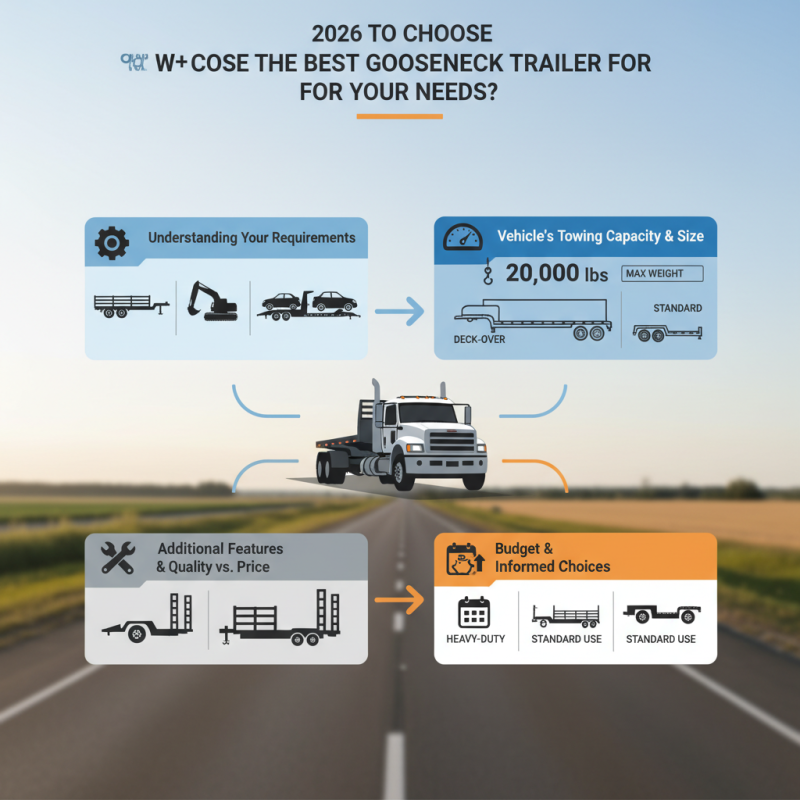
When choosing a Gooseneck Trailer, think about your vehicle’s towing capacity. Consider the maximum weight you'll need to transport. Size and design vary significantly. A deck-over design might suit larger loads, while a standard model could work for lighter items. Don't forget to assess additional features, like ramps or sides, that may improve functionality.
It’s easy to overlook important factors. Some buyers focus on price but neglect quality. A cheaper trailer could end up costing more in repairs. Reflect on your usage frequency; an infrequent user might not need a heavy-duty model. Ultimately, the best Gooseneck Trailer should meet your demands while also respecting your budget. Make informed choices to avoid common pitfalls and ensure satisfaction with your purchase.
Gooseneck trailers come in various types, each tailored for specific uses. They are popular for heavy loads, such as livestock or machinery transport. These trailers attach to a ball hitch located in the bed of a pickup truck, allowing for better maneuverability. The design offers stability, especially when towing large items.
Choosing the right gooseneck trailer requires understanding your needs. There are flatbed options, enclosed models, and those designed for specific tasks. Flatbeds are great for moving bulky items, while enclosed trailers protect cargo from the elements. Think about what you will transport most frequently. Will you need room for livestock or heavy equipment?
Some may overlook the importance of weight limits and payload capacity. It's essential to know the specifications of both your truck and the trailer. Buying a gooseneck trailer that exceeds your vehicle's capacity can lead to unsafe situations on the road. Every detail matters in ensuring a smooth towing experience. Always consider your specific needs and be cautious in your choices.
Choosing the right gooseneck trailer involves several key factors. First, consider your towing vehicle's capacity. It must match the weight of the trailer when loaded. Check the Gross Vehicle Weight Rating (GVWR). This ensures your vehicle can handle the trailer safely. A mismatch can lead to accidents.
Next, think about the trailer length. Longer trailers offer more space but can be harder to maneuver. Shorter ones are easier to handle but may not fit all your needs. Try to visualize how you'll be using the trailer. Frequent trips or occasional use? Your choice should reflect that.
Also, the design matters. Look at the configuration of the trailer bed. Will you need additional features like ramps or tie-down points? It’s vital to reflect on your requirements. Sometimes, these features feel excessive but they play a critical role in usability. Don’t overlook the importance of quality materials. They ensure durability but can impact your budget significantly. Balancing cost and quality is essential.
When choosing a gooseneck trailer, weight capacity is crucial. You need to assess your towing vehicle's capacity first. This ensures safety and performance during transport. Understanding the weight of your cargo is essential. It often exceeds what you might initially estimate. Inaccurate assessments could lead to unsafe towing conditions.
Consider the trailer's load requirements. It's vital to match these with your anticipated loads. Not all trailers are made the same. Some might be perfect for heavy-duty hauling, while others suit lighter loads. This mismatch can create problems down the road. If the trailer is underutilized or overworked, it won't last long.
Reflecting on your specific needs can help you avoid mistakes. Think about the types of materials you'll carry. Will there be variations in weight? How often will you tow? These questions matter. They shape your choice. A trailer that isn't aligned with your needs will be a burden, not an asset.
When choosing the perfect gooseneck trailer, consider length as a crucial factor. A longer trailer can haul more cargo but can also be challenging to maneuver. Think about your typical load size. If you frequently transport larger items, a longer trailer could be beneficial. However, for smaller jobs, a compact design might be more practical. Reflect on your specific needs here.
Width is another important feature. Standard widths often range between 6 to 8 feet. A wider trailer allows for larger vehicles or equipment but may limit access in tighter spaces. Evaluate where you will primarily use the trailer. If it’s for open highways, width may be less of an issue. But if you navigate narrow roads, a narrower design is worth considering.
Construction material plays a significant role in longevity and weight. Steel trailers are sturdy but can be heavier, while aluminum is lighter and resistant to rust. This means easier towing but possibly less durability. If your budget allows, investing in a well-constructed model can save costs in the long run. Analyze your priorities carefully to make a choice that fits your lifestyle. A thoughtful selection process will enhance your experience with the trailer.
Buying a gooseneck trailer involves more than just picking a model. Budgeting is crucial. Start by determining how much you can spend. Gooseneck trailers vary widely in price. Some might cost around $10,000, while others exceed $30,000. Consider both the initial price and ongoing costs.
Financing options can help ease the purchase burden. Look into loans with suitable interest rates. A loan can provide immediate funds, but payments may strain your budget. Be sure to calculate interest over time. You might also explore leasing options if you plan to use the trailer infrequently. Sometimes, renting a trailer can be more cost-effective than owning one.
Don’t forget to factor in additional expenses, like insurance and maintenance. These costs add up quickly. Reflect on your specific needs. Evaluate how often you'll use the trailer and for what purpose. Will it serve commercial tasks or personal projects? This clarity can guide you in making the best financial choice. Consider all factors carefully to avoid regret later.
Are you still planning to build your shipping container home this year? How about you could save up to $5,000 in delivery costs towards your project?
With the Tiny Home Expos in Brisbane, Adelaide and Canberra in the coming months, we are offering FREE DELIVERY (*up to $5000) to each state the Expo is in, in exchange with using your project as a display at the show. Offer expires 8 weeks before each Expo and limited to ONE project per Expo ONLY so reach out to us now to secure your spot!
Enquire Now