Choosing the right Pallet Conveyor manufacturer in China can shape warehouse speed, safety, and long-term operating costs. Buyers need more than a polished website or a low quotation. They need evidence of engineering capability, production consistency, export experience, and responsive after-sales service.
This guide examines ten leading Chinese manufacturers for buyers comparing pallet handling solutions. The review considers conveyor design, load capacity, control systems, customization, installation support, and quality management. It also looks at practical details, such as roller spacing, pallet dimensions, motor protection, and access for maintenance. A reliable supplier should explain these points clearly, not hide them behind broad promises.
Real projects often reveal more than brochures. A factory tour, sample test, or video inspection can show welding quality and assembly discipline. Buyers should request drawings, reference projects, test records, and realistic delivery schedules. Certifications matter, but they do not replace careful technical verification. Rankings can also change. This list is a useful starting point, not a final purchasing decision. Some manufacturers may suit heavy industrial loads, while others perform better in e-commerce or food distribution environments. That difference matters.
Look beyond price.
The strongest choice balances engineering depth, communication, safety, and lifecycle value. A small design mistake can cause repeated pallet jams, damaged goods, or costly production delays. Therefore, buyers should compare suppliers against their actual workflow, site conditions, and future expansion plans before signing a contract.
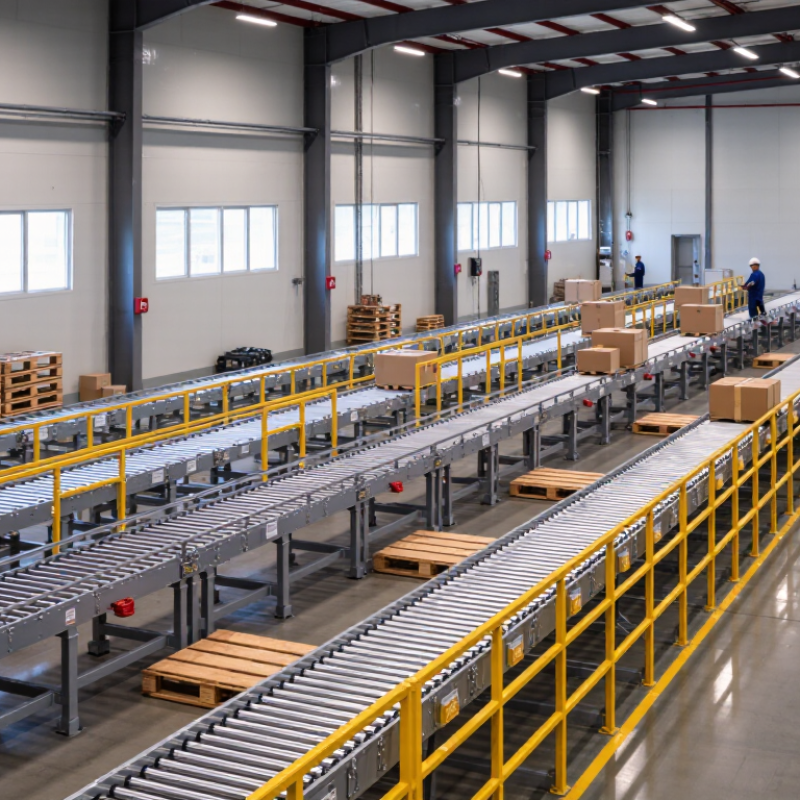
Pallet conveyors are powered or gravity-driven systems that move loaded pallets through warehouses and production areas. They use rollers, chains, or belt sections to support heavy, square loads. A typical line may include transfers, stops, sensors, and safety barriers. These parts coordinate pallet movement with storage, packing, and dispatch operations. In practice, a well-designed conveyor reduces forklift travel and prevents avoidable handling damage. Details matter.
Chinese manufacturers matter because they combine large-scale production with flexible engineering support. Many factories can adjust conveyor width, roller spacing, frame height, and control functions for different pallet sizes. Buyers can request layout drawings, load calculations, test videos, and sample assemblies before placing an order. This process reveals whether the supplier understands real warehouse conditions, not only product photographs. Experienced manufacturers also provide installation guidance, spare parts, and remote troubleshooting.
However, a low quotation does not prove good value. A conveyor may look strong but use unsuitable bearings, thin frames, or poorly protected controls. Buyers should verify maximum load, running speed, noise levels, motor specifications, and safety performance. Factory audits and customer references add useful evidence. Independent inspection can also catch alignment problems before shipment. One weakness in many top-ten comparisons is incomplete technical data. Rankings alone cannot replace a careful engineering review. Weather, floor conditions, pallet quality, and operator habits can change performance more than expected. That deserves honest attention.
Pallet conveyors are material-handling systems designed to transport loaded pallets between storage, production, picking, and shipping areas. Standard pallet footprints help buyers evaluate conveyor width, roller spacing, transfer equipment, and available floor space.
The chart uses nominal pallet dimensions recognized in ISO 6780 and common regional logistics practice. Chinese manufacturers matter because they commonly provide configurable conveyor layouts, pallet sizes, automation interfaces, and export-oriented engineering for different international handling requirements.
Selecting a pallet conveyor supplier in China requires more than comparing catalog prices. Define the load first: pallet dimensions, maximum weight, surface condition, and hourly throughput. A 1,000-kilogram pallet needs different rollers and drive power than a light carton pallet. Measure aisle width and transfer height on site. Small errors become expensive later.
Ask suppliers for layout drawings, load calculations, motor specifications, and control-system details. Their engineers should explain accumulation zones, emergency stops, sensors, and maintenance access clearly. Request factory photos, testing records, and references from similar warehouse projects. Supplier experience matters most when pallets vary in size or arrive unevenly. Check whether the team can adapt conveyors to cold rooms, dusty areas, or limited floor space. Avoid vague promises. Clear documents are stronger evidence.
Evaluate steel quality, roller alignment, welding consistency, and surface treatment. Ask how spare parts are identified and how quickly technical support responds. A low quotation may exclude installation guidance, software changes, or operator training. That can disrupt the budget.
China Top 10 Pallet Conveyor Manufacturers for Buyers
China’s Top 10 Pallet Conveyor Manufacturers serve factories, warehouses, and distribution centers worldwide. Their systems move heavy loads between storage, picking, wrapping, and dispatch areas. MarketsandMarkets valued the global conveyor system market at about USD 10.6 billion in 2024. The report projects approximately USD 14.2 billion by 2029. This growth increases buyer interest in Chinese engineering capacity. However, price alone is a weak selection method.
A practical review should compare load ratings, chain quality, transfer accuracy, controls, and maintenance access. Ask each manufacturer for test videos, layout drawings, and recent installation references. A reliable supplier should explain cycle time using real pallet dimensions. It should also disclose motor efficiency, noise levels, and spare-part lead times. MHI’s 2024 Annual Industry Report highlights automation as a continuing supply-chain investment priority. Yet, automation does not remove every risk. Poor pallet quality can still cause jams. So can weak handover training.
The top ten should be judged through documented factory capability, engineering experience, inspection records, and after-sales response. ISO certification helps, but it is not enough. Buyers should inspect welding consistency, cable protection, sensor placement, and emergency-stop coverage. Request a factory acceptance test before shipment. Small omissions matter. Some quotations exclude software integration, installation, or local support. Clarify these costs in writing. A cheaper conveyor may become expensive after repeated stoppages.
| Rank | Anonymous Supplier Profile | Primary Manufacturing Region | Core Conveyor Solutions | Typical Pallet Load Capacity | Typical Conveyor Speed | Compatible Pallet Sizes | Automation Capability | Common Application Sectors | Customization Scope |
|---|---|---|---|---|---|---|---|---|---|
| 1 | Supplier Profile 01 | East China | Chain conveyors, roller conveyors, transfer units | 500–2,000 kg per pallet | 8–18 m/min | 1,000 × 1,200 mm; 1,100 × 1,100 mm | PLC control, barcode integration, accumulation logic | Automotive, consumer goods, warehousing | Layout design, guarding, sensors, control panels |
| 2 | Supplier Profile 02 | South China | Heavy-duty roller conveyors and pallet transfer systems | 800–3,000 kg per pallet | 6–15 m/min | 1,000 × 1,200 mm; 1,200 × 1,200 mm | PLC, HMI, photoelectric detection, WMS interface | Food and beverage, chemicals, industrial manufacturing | Stainless-steel sections, washdown design, custom elevations |
| 3 | Supplier Profile 03 | Central China | Powered roller conveyors, turntables, pallet lifts | 500–1,500 kg per pallet | 10–20 m/min | 800 × 1,200 mm; 1,000 × 1,200 mm | PLC control, variable-frequency drives, safety circuits | Third-party logistics, retail distribution, e-commerce | Modular conveyor lengths and multi-level routing |
| 4 | Supplier Profile 04 | East China | Chain-driven live roller conveyors and pallet dispensers | 600–2,500 kg per pallet | 5–12 m/min | 1,000 × 1,200 mm; 1,200 × 1,000 mm | PLC, pallet identification, motorized stops | Paper, packaging, building materials | Heavy-frame construction, custom roller pitch, line extensions |
| 5 | Supplier Profile 05 | North China | Roller conveyors, shuttle-compatible conveyors, lift tables | 1,000–4,000 kg per pallet | 4–12 m/min | 1,000 × 1,200 mm; 1,200 × 1,200 mm | AS/RS integration, PLC, WCS and WMS communication | Cold chain, heavy industry, distribution centers | Cold-resistant components, reinforced frames, custom controls |
| 6 | Supplier Profile 06 | Southwest China | Flexible pallet conveyor lines and modular roller sections | 400–1,500 kg per pallet | 8–16 m/min | 800 × 1,200 mm; 1,000 × 1,200 mm | Basic PLC, sensors, emergency-stop circuits | General manufacturing, appliances, spare parts | Compact layouts, adjustable supports, quick installation |
| 7 | Supplier Profile 07 | South China | Stainless-steel pallet conveyors and hygienic transfer lines | 500–2,000 kg per pallet | 5–14 m/min | 1,000 × 1,200 mm; 1,100 × 1,100 mm | PLC, traceability systems, weighing and inspection options | Food processing, beverages, pharmaceuticals | 304 stainless steel, washdown components, hygienic guarding |
| 8 | Supplier Profile 08 | East China | High-speed roller conveyors, merge units, pallet sorters | 500–1,500 kg per pallet | 12–25 m/min | 1,000 × 1,200 mm; 1,200 × 1,000 mm | PLC, servo positioning, barcode and RFID integration | E-commerce, retail, parcel and logistics hubs | High-throughput routing, custom sorting logic, line balancing |
| 9 | Supplier Profile 09 | North China | Heavy-load chain conveyors, pallet turntables, transfer cars | 1,000–5,000 kg per pallet | 3–10 m/min | 1,200 × 1,200 mm; 1,200 × 1,500 mm | PLC, safety scanners, automatic positioning systems | Steel, machinery, automotive components | Reinforced structures, high-load drive systems, custom platforms |
| 10 | Supplier Profile 10 | Central China | Standard pallet conveyors, accumulation zones, pallet handling modules | 500–2,000 kg per pallet | 6–18 m/min | 800 × 1,200 mm; 1,000 × 1,200 mm | PLC, photoelectric sensors, basic warehouse-system connectivity | Warehousing, packaging, chemicals, general industry | Standardized modules, custom conveyor width, optional safety guarding |
Choosing among China’s top pallet conveyor manufacturers requires more than comparing prices. Product quality appears in the details: welded frame alignment, roller thickness, motor protection, and sensor response. Ask for load tests using your actual pallet weight and dimensions. A smooth demonstration is not enough.
Customization should match your warehouse, not merely your drawing. Experienced manufacturers can adjust conveyor height, transfer units, guarding, controls, and software interfaces.
Request layout simulations before production. Check whether spare parts remain accessible after installation. Small design changes can prevent large maintenance problems. However, over-customization may increase cost and delay delivery.
Service often separates a reliable supplier from an attractive quotation.
Review response times, installation training, documentation, warranty limits, and remote troubleshooting methods. Ask for references from facilities with similar dust, temperature, and operating hours.
During factory visits, inspect unfinished machines, not only polished samples. A neat showroom can hide weak quality control. I have seen buyers focus heavily on steel thickness while overlooking programming support. That decision became expensive later.
Require clear acceptance standards, test records, and a named service contact before signing.
Selecting among China’s top pallet conveyor manufacturers requires more than comparing catalog prices. Buyers should match the supplier’s experience with the project’s actual load, pallet size, throughput, and operating environment. Ask for drawings, test records, and references from facilities with similar working conditions.
A reliable manufacturer should explain conveyor speed, motor selection, roller spacing, control architecture, and safety protection in clear language. Request a layout simulation or factory acceptance test before production. Watch how the team handles changes. A supplier that documents revisions is usually easier to manage during installation. Small details matter, such as spare sensors, cable labeling, and access for maintenance.
Check quality systems, export experience, installation support, and response times. Confirm whether technicians can train your operators and provide usable manuals. Do not judge capability from polished videos alone. Visit the production site when practical, inspect welding and assembly areas, and ask how defects are recorded. One weakness may not disqualify a supplier, but vague answers deserve attention. Buyers often focus too heavily on the lowest quotation. That can become expensive when integration, downtime, or replacement parts are ignored. Leave room for uncertainty. Even a well-planned conveyor project may need adjustments after real pallets enter the line.
Are you still planning to build your shipping container home this year? How about you could save up to $5,000 in delivery costs towards your project?
With the Tiny Home Expos in Brisbane, Adelaide and Canberra in the coming months, we are offering FREE DELIVERY (*up to $5000) to each state the Expo is in, in exchange with using your project as a display at the show. Offer expires 8 weeks before each Expo and limited to ONE project per Expo ONLY so reach out to us now to secure your spot!
Enquire Now