Choosing a supplier for a 20ft shipping container is not just a search for the lowest quote. Buyers need to understand how construction quality, delivery schedules, customization, and after-sales support vary across manufacturers. A polished website can show a clean container in a sunny yard; it cannot prove how seams, floorboards, or locking bars will hold up over time. Details matter.
This guide introduces ten China-based suppliers and explains what buyers should compare before requesting a quotation. Treat the selection as a research starting point, not a guaranteed ranking. Product ranges, production capacity, and export services can change. We consider practical signals such as factory information, specifications, customization options, inspection processes, shipping experience, and clear communication. Ask for current photos, drawings, material details, and a written cost breakdown. A small mismatch in dimensions or fittings can cause an expensive delay. No list is perfect.
You will also find questions to ask about new and used units, lead times, warranties, and delivery arrangements. The right supplier depends on the job: a site office, storage unit, or transport-ready container may need different features. Compare like with like, and verify claims directly with the company rather than relying on a catalog alone. Public information rarely reveals every production weakness, and a confident sales reply is not a quality test. Use these profiles to narrow your options, then request evidence and confirm terms before placing an order. That extra check is worth the time.
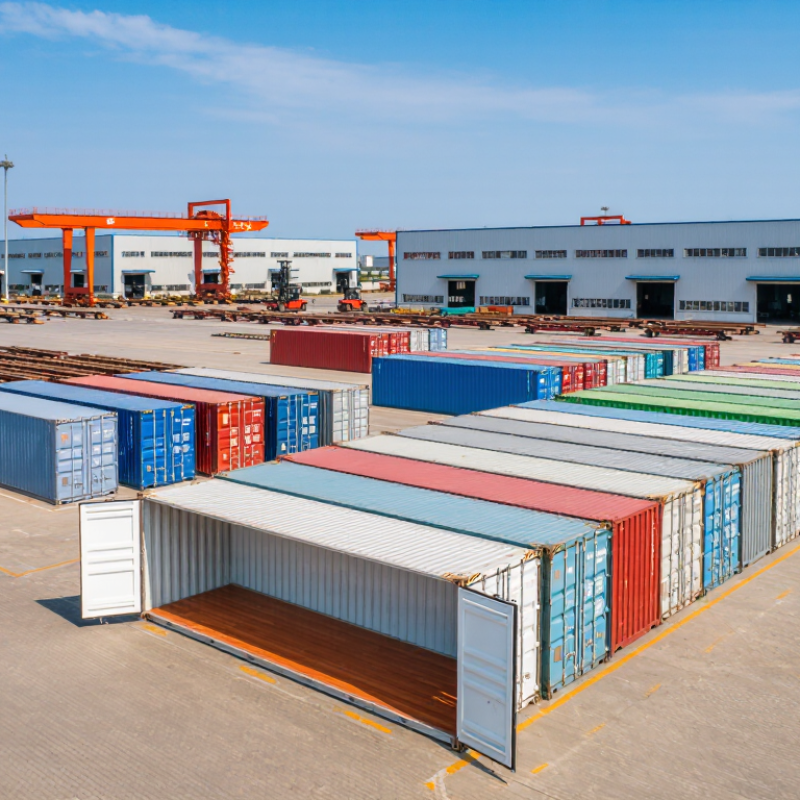
A 20ft shipping container is a reusable steel unit designed for moving and storing cargo. ISO 668:2020 sets its standard external dimensions at about 6.06 metres long, 2.44 metres wide, and 2.59 metres high. Internal space and payload vary by model, so buyers should check the unit’s specification plate and drawings. That matters.
UNCTAD’s Review of Maritime Transport 2024 reports that global container port throughput reached 858.9 million TEUs in 2023, up 2.4% from 2022. A TEU represents one 20ft container equivalent. The figure signals the scale of container transport, but it does not measure demand for new boxes alone. That distinction is easy to miss.
In China, buyers can source new containers from manufacturers, or approach trading and export firms that coordinate production and delivery. Some depots also sell used units. Ask who made the container, which standard it follows, and what inspection records are available. Check door seals, corner fittings, floor condition, and visible corrosion in person or through detailed dated photographs. A fresh coat of paint proves little. I would also verify whether the quoted price includes inland transport; quotes can leave that unclear.
| No. | Supplier Profile or Sourcing Hub | Typical Offering | Useful Checks Before Ordering | Best Suited For |
|---|---|---|---|---|
| 1 | Container manufacturers | New standard dry containers and, depending on the factory, modified or special-purpose units. | Confirm production location, applicable ISO dimensions, CSC safety approval, inspection arrangements, and delivery terms. | Buyers seeking new containers or custom specifications. |
| 2 | Used-container dealers | Used 20ft containers in varying grades, commonly described by condition and suitability for cargo or storage. | Request dated photos, a condition report, door and floor checks, and confirmation of whether the unit is cargo-worthy. | Storage projects and buyers prioritizing lower purchase cost. |
| 3 | Shanghai-area sourcing | Container procurement and logistics services serving a major port and manufacturing region. | Check the actual stock or factory location, inland transport cost, port charges, and export documentation. | Shipments routed through Shanghai or nearby ports. |
| 4 | Qingdao-area sourcing | Container supply and export logistics options in a major northern coastal port region. | Compare availability, inland delivery distance, export schedule, and the supplier’s inspection process. | Buyers shipping from northern China. |
| 5 | Ningbo-area sourcing | Container procurement and shipping services serving the Ningbo-Zhoushan port region. | Confirm whether the quoted price includes local transport, handling, and any port-related costs. | Buyers using the Ningbo-Zhoushan gateway. |
| 6 | Tianjin-area sourcing | Container supply and transport options serving a major northern China port. | Verify stock status, delivery route, export-readiness, and the planned vessel or transport schedule. | Projects in northern China or shipments through Tianjin. |
| 7 | Guangdong and Pearl River Delta sourcing | Container procurement and logistics services in a large southern manufacturing and export region. | Ask for the precise loading location and compare delivery costs to the selected port. | Buyers located in southern China or shipping from nearby ports. |
| 8 | Container modification workshops | Possible modifications include doors, windows, insulation, electrical fit-outs, and interior finishes. | Request drawings, a written scope, material specifications, and photographs or inspection records before dispatch. | Site offices, storage conversions, and other non-standard uses. |
| 9 | Export trading and logistics providers | Sourcing coordination, export paperwork, inland transport, and freight arrangements; the container may come from a separate manufacturer or dealer. | Identify the actual seller, confirm who handles quality claims, and obtain an itemized quote with clear Incoterms. | Overseas buyers who need help coordinating export and shipping. |
| 10 | Refrigerated or special-container suppliers | Refrigerated, open-top, flat-rack, or other specialized units, subject to availability and specification. | Confirm equipment condition, operating or inspection records where relevant, dimensions, power requirements, and certification. | Cargo requiring temperature control or non-standard loading. |
| Specification | Typical Reference Figure | Important Note |
|---|---|---|
| External length | About 6.058 m (20 ft) | Confirm the exact unit specification before arranging transport or installation. |
| External width | About 2.438 m | Standard dry-container reference dimension. |
| External height | About 2.591 m | High-cube containers are taller; do not assume this height applies to them. |
| Internal dimensions | Approximately 5.9 m long × 2.35 m wide × 2.39 m high | Actual usable dimensions vary by design, manufacturer, and container condition. |
| Internal capacity | Approximately 33 m³ for a standard dry container | Door openings and cargo shape can reduce usable loading space. |
| Maximum gross mass | Commonly up to 30,480 kg on standard ISO units | Read the individual container’s safety plate; road and rail limits may be lower. |
| Tare mass and payload | Varies by unit; payload is the permitted gross mass minus tare mass | Use the figures on the specific container’s plate rather than a general estimate. |
| Supplier documentation | Specification sheet, condition report, and relevant safety or inspection records | Requirements depend on whether the container is new, used, modified, or intended for international transport. |



Use the form below to drop us an email if you have any question or comments.