China Best Steel Structure Manufacturers for Global Buyers

Choosing reliable steel structure manufacturers in China requires more than comparing factory prices. Global buyers must assess engineering capability, material traceability, production control, and project experience. The World Steel Association reported approximately 1.89 billion tonnes of crude steel production worldwide in 2023, showing the scale of this industrial supply chain. Construction remains one of its most important demand sectors.

China offers extensive fabrication capacity, but capability varies significantly between suppliers. Experienced manufacturers can provide shop drawings, connection calculations, welding procedures, and inspection records. They should also explain how projects meet standards such as EN 1090, AISC 360, AWS D1.1, or applicable local codes. ISO 9001 certification helps demonstrate process control, although certification alone cannot guarantee excellent workmanship.

A serious evaluation should include factory audits, sample weld inspections, coating thickness checks, and independent material verification. Look closely at practical details: column straightness, bolt-hole accuracy, weld appearance, and packaging for ocean transport. The World Steel Association’s Steel Statistical Yearbook provides useful production context, while ISO standards support consistent quality expectations across borders.

Price still matters. It should not be the only measure. A low quotation may exclude engineering revisions, testing, corrosion protection, or installation support. No ranking is perfect. Even a polished brochure can hide weak project controls. Therefore, this guide compares China’s best steel structure manufacturers through evidence, technical depth, communication quality, and delivery reliability, helping buyers make a more informed and defensible decision.
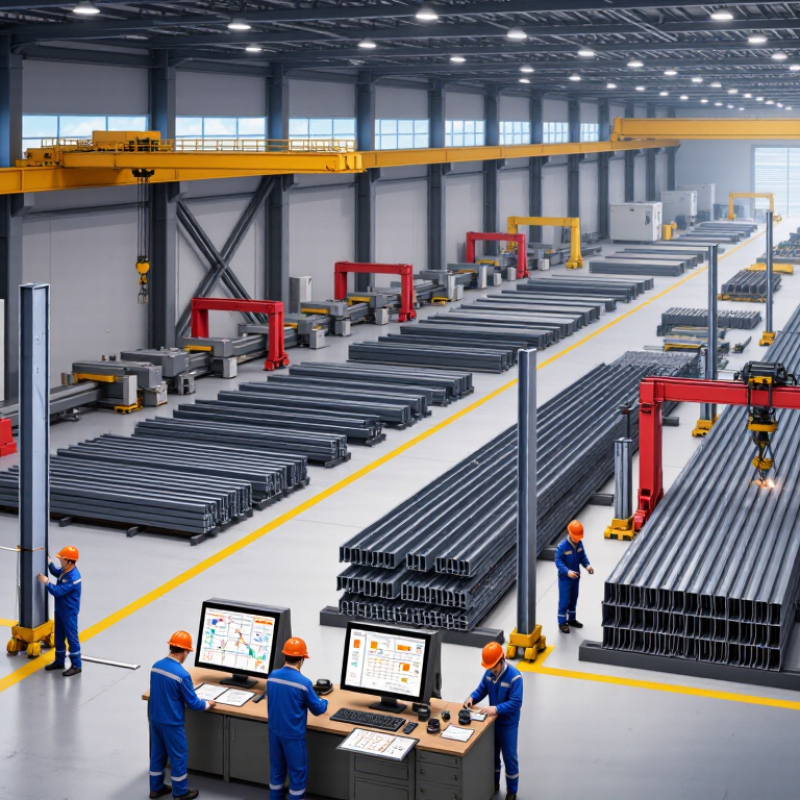
China Best Steel Structure Manufacturers for Global Buyers

What Defines a Leading Chinese Steel Structure Manufacturer

What Defines a Leading Chinese Steel Structure Manufacturer

A leading Chinese steel structure manufacturer offers more than low-cost fabrication. It combines practical experience with disciplined engineering. Its team understands warehouses, workshops, commercial buildings, and complex industrial facilities. Engineers should review wind loads, seismic conditions, fire requirements, and local building codes before production. Clear drawings prevent expensive changes later.

Reliable manufacturers use controlled procedures at every stage. Steel plates arrive with verified material certificates. Welders hold appropriate qualifications. Cutting, welding, blasting, and coating records remain traceable. Inspectors check dimensions with calibrated tools. They also welcome independent inspections before shipment. This openness gives overseas buyers measurable confidence. However, certificates alone prove little. Buyers should examine recent project records, factory capacity, and quality reports.

Communication defines the daily experience. A capable export team explains tolerances, packing methods, delivery schedules, and installation risks in plain English. It responds with drawings, not vague promises. Small details matter, such as labeled bundles, moisture protection, and matching bolt lists. Mistakes can still happen. A stronger manufacturer reports them early, studies the cause, and improves the process. That honest response often reveals more professionalism than a perfect sales presentation. Suppliers should also support installation questions after delivery, because a structure is not truly successful if workers struggle on site.

Key Steel Structure Products and Manufacturing Capabilities

Global buyers need more than low steel prices. They need verified products, repeatable fabrication, and clear delivery evidence. World Steel Association data shows global crude steel output reached about 1.89 billion tonnes in 2023. That scale makes supplier selection a technical decision, not a catalogue exercise. Key products include portal-frame warehouses, multi-storey beams, trusses, mezzanines, bridges, and modular steel units. Each product demands different load paths, tolerances, fire strategies, and corrosion protection.

Strong manufacturers convert drawings into controlled production. Look for 3D detailing, CNC cutting, qualified welding, shot blasting, coating, and dimensional inspection. Factory acceptance records should identify heat numbers, weld procedures, coating thickness, and nonconformities. EN 1090, AISC 360, ISO 9001, and project-specific codes can guide verification. However, certificates alone prove little. Ask for sample inspection reports and photographs of packed members, not polished promises. The OECD Steel Outlook 2024 highlights continuing overcapacity and weak-demand risks in global steel markets. Cost estimates should therefore separate steel weight, fabrication, coating, freight, erection, and maintenance.

Tips: Request a take-off list, mill certificates, welding records, and marked-up approval drawings before payment milestones. Confirm tolerances early. One practical weakness remains: some suppliers present capacity without proving monthly output or rework rates. Treat that gap as a question, not an accusation. Factory visits can reveal storage discipline, crane access, worker protection, and whether finished frames actually match the approved drawings.

China Best Steel Structure Manufacturers for Global Buyers - Key Steel Structure Products and Manufacturing Capabilities

Product or Capability Typical Applications Common Material Grades Typical Technical Range Relevant Standards or Quality Controls
Prefabricated steel buildings Warehouses, workshops, logistics facilities, agricultural buildings and industrial plants Structural carbon steel; commonly ASTM A36, ASTM A572 Grade 50, S275 or S355 Single- or multi-span layouts; building widths and heights are engineered according to loading, site conditions and local codes Load calculations, connection design, dimensional inspection, welding procedure qualification and coating inspection
Welded H-beams and built-up sections Heavy industrial buildings, high-load columns, portal frames, platforms and bridges ASTM A36, ASTM A572 Grade 50, S275JR, S355JR or equivalent grades Custom web and flange dimensions; plate thickness and member length are selected by structural calculation Automatic submerged-arc welding, ultrasonic testing where specified, flange alignment and weld visual inspection
Hot-rolled sections Columns, beams, bracing, mezzanines, equipment supports and general structural framing Universal beams, channels, angles and hollow sections in carbon or low-alloy structural steel Standard mill-produced profiles; member lengths are commonly cut to project requirements Mill certificates, chemical analysis, tensile testing, dimensional checks and traceability records
Steel trusses and space frames Large-span roofs, sports facilities, exhibition halls, terminals and industrial roofs Circular hollow sections, square or rectangular hollow sections, angles and welded plates Span, geometry and member sizes are customized to roof loads, deflection limits and architectural requirements Node and connection design, geometric control, weld inspection and trial assembly when required
Steel platforms and industrial structures Factory platforms, stair towers, pipe racks, maintenance walkways and equipment supports Carbon steel, galvanized steel or painted structural steel, subject to the project environment Includes beams, grating, handrails, stairs, base plates and bolted or welded connections Slip resistance, guardrail dimensions, weld quality, anchor-bolt positioning and load verification
Steel towers and support structures Lighting towers, communication supports, utility structures and industrial support frames Structural carbon steel, low-alloy steel and galvanized components where corrosion protection is required Designed for wind, ice, seismic and equipment loads according to the installation location Bolt torque control, verticality checks, galvanizing thickness measurement and foundation interface inspection
CNC cutting and plate processing Base plates, stiffeners, gusset plates, connection plates and custom structural components Carbon steel, low-alloy structural steel and weather-resistant steel where specified Plasma, flame or laser cutting selected according to plate thickness, accuracy and production volume CAD/CAM data control, cut-edge inspection, hole-position checks and dimensional verification
Welding and fabrication Assembly of beams, columns, frames, trusses, plates and fabricated structural modules Weldable structural steels compatible with the specified welding procedure Processes may include GMAW, FCAW, SMAW and submerged-arc welding depending on component design Qualified welding procedures, approved welders, preheat control, visual testing and non-destructive testing when specified
Surface preparation and coating Protection of structural steel for indoor, outdoor, coastal and industrial environments Paint systems, hot-dip galvanizing or duplex systems selected by exposure category Abrasive blasting, primer application, intermediate coats and topcoats according to the corrosion specification Surface cleanliness assessment, dry-film thickness measurement, adhesion checks and repair documentation
Engineering, detailing and project documentation Design development, fabrication drawings, quantity take-offs, installation planning and export documentation Design basis may use local building codes, Eurocodes, AISC provisions or other approved project standards Typical deliverables include calculations, shop drawings, erection drawings, packing lists and inspection records Drawing revision control, design review, material traceability, inspection and test plans, and final quality dossiers

Note: Technical ranges are typical industry configurations. Final material grades, dimensions, tolerances, testing requirements and coating systems should be confirmed against the approved structural design, project specifications and applicable local standards.

Quality Standards, Certifications, and Production Control

China Best Steel Structure Manufacturers for Global Buyers

Quality Standards, Certifications, and Production Control

Global buyers need more than attractive quotations when selecting steel structure manufacturers. Quality begins with documented standards, not promises. A capable factory should identify applicable codes, material grades, welding procedures, and acceptance criteria before fabrication starts. Ask for current certificates and their exact scope. ISO 9001 supports process discipline, while EN 1090 or equivalent requirements may apply to structural execution in certain markets. Requirements vary by destination.

Production control should be visible on the shop floor. Each steel batch needs a heat number linked to mill certificates and cutting records. Welders should hold relevant qualifications, and approved welding procedures must guide their work. Inspectors may check fit-up, weld appearance, bolt holes, dimensions, and coating thickness. Non-destructive testing can verify selected welds when project specifications require it. Photographs help, but signed inspection records carry greater weight.

Reliable manufacturers welcome independent inspections before shipment. They can provide inspection and test plans, calibration records, packing lists, and corrective-action reports. Small errors still happen. A missed coating reading or unclear revision can delay installation. Production meetings, drawing control, and final document reviews reduce these risks. Buyers should compare evidence, not just certificate logos. Factory experience is valuable, yet honest reporting of limits is more trustworthy than perfect claims. Watch how workers label parts, protect finished surfaces, and handle rejected items. Those details often reveal whether quality control is real.

Export Services, Global Compliance, and Project Support

For global buyers, steel structure export is more than fabrication and shipping. It requires controlled documents, verified materials, and practical project communication. An experienced manufacturer should match design requirements with the destination country’s codes, loading conditions, and inspection expectations.

Export teams typically prepare mill certificates, welding records, dimensional reports, packing lists, commercial invoices, and certificates of origin. Documents must match the actual cargo. A single incorrect beam length or customs code can delay clearance.

Depending on the market, projects may require EN, ASTM, ISO, or other recognized standards. Independent inspection can verify coating thickness, weld quality, bolt grades, and finished dimensions before loading.

Project support should continue after production. Engineers can review foundation drawings, connection details, erection sequences, and site constraints with the buyer’s team. Clear shop drawings reduce confusion when containers arrive at a busy construction site. We have learned that translation alone is not enough. Technical terms need shared definitions, marked revisions, and written approval points.

Small details matter.

A reliable supplier also plans container loading around unloading equipment and installation order. Heavy frames should not be buried beneath smaller components. Export packaging needs protection from moisture, abrasion, and rough handling.

Still, no process is perfect. Late design changes, incomplete site data, or unclear local requirements can create risk. Honest communication helps expose these gaps early, while documented checks keep responsibility visible throughout the project.

How Global Buyers Can Evaluate and Select a Supplier

China Best Steel Structure Manufacturers for Global Buyers

How Global Buyers Can Evaluate and Select a Supplier

Selecting a steel structure supplier requires more than comparing quoted prices. Examine project experience, engineering capacity, and production controls. Ask for drawings, inspection records, and completed project references. Look beyond photographs. A reliable manufacturer should explain steel grades, welding procedures, connection details, and corrosion protection clearly.

Request evidence of quality management, such as ISO 9001 certification and relevant fabrication qualifications. Check whether material certificates match the delivered steel. Traceability matters from raw material receiving to final dispatch. Review weld inspection methods, dimensional tolerances, coating thickness, and packing procedures. Ask how the supplier handles design changes, damaged components, and delayed shipments. Specific answers reveal operational maturity.

Communication also deserves careful testing. Send a technical question and observe the response time and precision. A capable team should identify missing loads, unclear specifications, or unsuitable connection details before production. Visit the factory when possible, or arrange an independent inspection. A polished factory tour can still hide weak documentation. No evaluation is perfect. Budget pressure may encourage shortcuts, while excessive paperwork may create false confidence. Compare verified evidence, not promises. Include inspection rights, correction responsibilities, delivery milestones, and payment safeguards in the contract. A supplier who accepts reasonable scrutiny is usually better prepared for demanding international projects.

Article Source:

ENQUIRE NOW
close
Get In Touch

Use the form below to drop us an email if you have any question or comments.