10 Best Toothbrush Mold Manufacturers for Global Buyers

Choosing among the 10 best toothbrush mold manufacturers takes more than comparing prices or polished catalog photos. A toothbrush mold must produce consistent parts, protect fine details, and support practical production cycles. Small features matter: bristle-hole positions, handle texture, parting lines, and the fit of moving components. A sample may look excellent. The harder test is whether later batches match it.

For technical context, Dr. David Kazmer is a plastics engineering scholar whose work covers injection molding and manufacturing. No verified, toothbrush-mold-specific quotation from him is provided here, so this guide does not invent one. Instead, a useful editorial principle is: “Repeatable quality matters more than a perfect first sample.” Treat it as a buyer’s checklist, not a quotation from Dr. Kazmer. Ask manufacturers how they control dimensions, inspect mold components, and address wear. Request evidence, not just assurances.

Details reveal the difference. Look for clear drawings, documented trial results, and realistic schedules for revisions and maintenance. Check whether the supplier understands your resin, cavity requirements, and expected production volume. A low quote can hide gaps in communication or after-sales support. It can also be a fair offer. Verify before deciding.

No supplier is ideal for every project. This ranking helps global buyers compare capabilities, communication, and support, while recognizing that the best choice depends on the product and production plan. A little skepticism helps.
10 Best Toothbrush Mold Manufacturers for Global Buyers

Understanding Toothbrush Molds and Their Role in Manufacturing

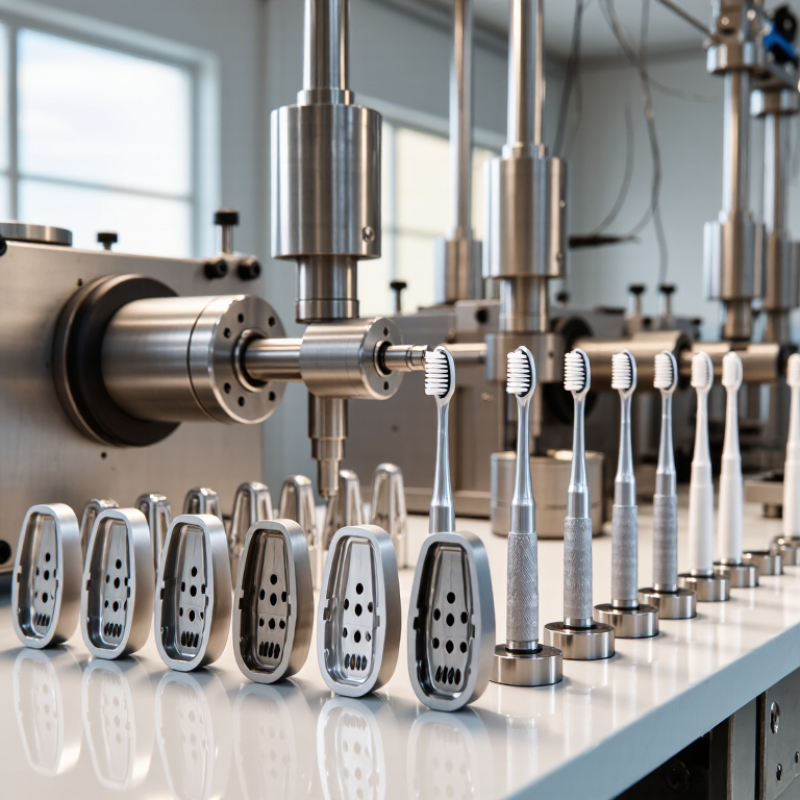
A toothbrush mold shapes the handle, neck, and head base during injection molding. It does not install the bristles; tufting happens in a later production step. Inside the mold, precisely cut cavities define the handle’s curves, grip texture, and dimensions. Small details matter. A shallow groove can affect comfort, while a rough parting line may leave a visible seam. Even minor dimensional errors can complicate assembly or packaging.

Mold design influences both product consistency and production efficiency. Cooling channels help control heat, while ejector pins release the molded handle without damaging it. Multi-cavity molds can produce several handles per cycle, but each cavity needs consistent filling and cooling. Manufacturers typically review drawings, material behavior, and sample parts before full production. A useful inspection checks dimensions, surface finish, and fit with the tufting process. A warped handle may point to material or process settings, not the mold alone. That distinction is easy to overlook.

Tips: Ask how sample parts are measured, not just whether they look acceptable. Check grip details under ordinary lighting, and inspect the parting line by touch. Confirm that the chosen material suits the mold design. Small trial runs can reveal issues early, though they rarely predict every production condition.

Key Criteria for Evaluating Toothbrush Mold Manufacturers

Selecting a toothbrush mold manufacturer requires more than comparing quotations. Check experience with multi-cavity injection molds, cavity balance, cooling layout, and venting. Ask for a sample inspection report, steel certificates, and documented trial results. Small details matter. Handle dimensions should remain consistent across cavities, not just on one polished sample.

Evaluate process control and service capacity. Request measured cycle times, maintenance instructions, spare-insert availability, and a clear record of design changes. During a mold trial, inspect dimensions and surface finish, then confirm the parts run reliably on the intended machine. A fast first trial is not a guarantee; production conditions can reveal uneven cooling or flash. That deserves a second look.

Material efficiency is also worth discussing. The OECD’s 2022 Global Plastics Outlook reports that global plastic waste reached 353 million tonnes in 2019, while only 9% was recycled. This broad industry figure is not a mold-performance benchmark, but it reinforces the value of reducing startup scrap and rejected parts. Ask manufacturers how they track scrap during trials and what adjustments they make when results drift. A credible supplier should show records, explain limits plainly, and avoid promising zero defects.

10 Toothbrush Mold Manufacturers Serving Global Buyers

Toothbrush mold manufacturers serving global buyers vary widely in engineering depth, production capacity, and communication practices. A useful comparison looks beyond catalog photos. Ask whether a supplier can build multi-cavity molds, manage fine bristle-hole layouts, and share measurable inspection data. Small details matter: a poorly finished cavity or inconsistent cooling channel can affect cycle time and molded-part consistency. Ask for sample parts and tool trial records.

The ten manufacturers in a buyer’s shortlist should also be assessed for practical export support. Clear drawings, timely progress reports, and protective packaging help reduce avoidable delays. Confirm who handles mold maintenance and how quickly replacement components can be supplied. Good answers are specific. A polished presentation proves little on its own. I would also ask how the supplier responds when a trial reveals flash or uneven dimensions; that conversation can be more revealing than a price sheet. Still, no checklist predicts every production issue, and buyers may need to revise their expectations after seeing the first molded samples.

Comparing Mold Design, Materials, Precision, and Production Capacity

Grand View Research estimated the global toothbrush market at about USD 7.1 billion in 2023, with growth expected through 2030. For global buyers, this makes mold selection more than a tooling decision: design, repeatability, and output all affect supply planning. The report describes market demand, not mold performance, so buyers should verify factory claims directly. A polished sample can hide uneven production.

Compare mold design by cavity layout, cooling channels, gate placement, and ease of maintenance. These details influence cycle time and visible defects, such as flash along a handle seam. Mold steel should match the expected production volume and resin; request material certificates and a documented maintenance plan. Precision checks should cover critical dimensions, parting lines, and fit with downstream tufting equipment. ISO 20126:2022 sets performance requirements for manual toothbrushes, but it does not certify a mold or its maker.

Capacity needs evidence. Ask for validated cycle times, cavity count, machine availability, and output from a sustained trial, not only a maximum-rate estimate. PlasticsEurope reported 413.8 million tonnes of global plastics production in 2023, underscoring the scale of material processing, though not toothbrush-specific demand. Small details matter. A supplier may quote tight tolerances, yet omit how measurements are taken. Request inspection records and sample parts from a production run; then compare them with the approved drawing.

10 Best Toothbrush Mold Manufacturers for Global Buyers

Suggested evaluation weights for comparing mold design, materials, precision, and production capacity.

Precision and production capacity receive the highest weights in this sample procurement framework. The percentages are suggested buyer-assessment weights, not measured ratings or performance claims about specific manufacturers. Evaluate suppliers using verified quotations, sample molds, inspection records, and documented production capacity.

Assessing Supplier Quality, Costs, and International Logistics

Choosing a toothbrush mold manufacturer requires more than comparing quoted prices. Ask how the supplier controls cavity dimensions, cooling, and repeatability across production runs. Request inspection records and test-mold samples, then check fit, surface finish, and flash around the bristle-hole areas. A polished sample is not enough. Ask how defects are documented and corrected.

Costs extend beyond the mold itself. Clarify whether the quotation includes design adjustments, trial runs, spare inserts, and routine maintenance. A lower initial price may mean longer tuning or more downtime later. Compare the cost of ownership, not just the first invoice. Small details matter. Get payment milestones and change-order terms in writing, since revisions can shift the budget.

International logistics can affect both delivery and quality checks. Confirm crate dimensions, shipping terms, export paperwork, and who arranges insurance before production is complete. Ask for a realistic schedule that includes mold trials, approval, packing, and transit; port delays are not always predictable. Freight changes the math. For distant suppliers, agree on how critical spare parts will be shipped and how technical support will work across time zones. One oversight remains easy to make: buyers often verify the mold carefully, but leave too little time to inspect it before mass production.

10 Best Toothbrush Mold Manufacturers for Global Buyers — Assessing Supplier Quality, Costs, and International Logistics

An anonymized, market-level sourcing comparison for identifying and evaluating potential toothbrush mold suppliers. Entries describe manufacturing markets, not specific companies or verified supplier rankings.

Shortlist Slot Potential Sourcing Market Common Sourcing Advantage Quality Checks to Prioritize Relative Cost Profile International Logistics Considerations Best Fit for Buyers
01 Mainland China Broad supplier ecosystem for mold making, machining, and injection-molding support. Review mold-flow analysis, cavity consistency, steel certificates, trial reports, and spare-parts policy. Often lower to mid-range Many export options; confirm Incoterms, export packing, shipping schedule, and who pays import duties. Buyers seeking a wide supplier pool and flexible project options.
02 Taiwan Established export-oriented manufacturing base and access to regional tooling supply chains. Check dimensional inspection records, mold life assumptions, material traceability, and sample approval process. Often mid-range Confirm the actual port of loading, transit route, and any transshipment requirements. Buyers balancing export experience with regional supplier access.
03 Japan Strong general reputation for precision manufacturing and process discipline. Assess cavity-to-cavity variation, machining accuracy, preventive-maintenance documentation, and validation samples. Often mid to high Plan for international freight, customs documentation, and technical communication across time zones. Buyers prioritizing precision, documentation, and long-term consistency.
04 South Korea Developed manufacturing base with access to advanced production and engineering services. Verify measurement methods, mold acceptance criteria, resin compatibility, and production-trial records. Often mid to high Request a freight plan and confirm packaging protects mold components from corrosion and impact. Buyers looking for technically capable suppliers in East Asia.
05 Germany Strong industrial engineering ecosystem and access to precision tooling expertise. Review inspection plans, steel and component specifications, maintenance instructions, and documented acceptance tests. Often high EU shipments may simplify movement within the region; buyers elsewhere should budget for freight and import clearance. Buyers emphasizing engineering support, traceability, and documented processes.
06 Italy Established machinery and plastics-processing industries provide a broad industrial supply base. Confirm mold design ownership, spare-component availability, trial conditions, and production repeatability. Often mid to high For European buyers, assess road freight; for overseas orders, compare sea and air freight for cost and urgency. Buyers seeking European supplier access and engineering collaboration.
07 Portugal Part of a European plastics and mold-making ecosystem with access to EU trade and transport networks. Ask for verified references, cavity inspection data, mold trial results, and a clear after-sales service scope. Often mid-range EU location can support regional road transport; non-EU buyers should verify customs and delivery terms. Buyers in Europe seeking regional sourcing and direct technical contact.
08 Czech Republic Central European location offers access to regional industrial suppliers and transport routes. Evaluate machining capability, dimensional reports, maintenance support, and tooling change-control procedures. Often mid-range Central European road connections can be useful for nearby markets; confirm cross-border delivery responsibilities. Buyers serving European markets who value regional logistics.
09 Switzerland High-precision industrial manufacturing environment and strong emphasis on technical documentation. Check measurement-system capability, material documentation, engineering change records, and service response terms. Often high Switzerland is outside the EU customs union; confirm import paperwork and applicable duties for EU deliveries. Buyers with demanding precision or documentation requirements.
10 United States Domestic sourcing can support closer engineering communication and local service for North American buyers. Review inspection reports, trial-part approval, mold ownership terms, warranty coverage, and local maintenance capacity. Often mid to high Domestic freight may reduce cross-border complexity for U.S. buyers; international buyers should compare shipping and import costs. North American buyers prioritizing proximity, service access, and simpler domestic logistics.
ENQUIRE NOW
close
Get In Touch

Use the form below to drop us an email if you have any question or comments.