What Are the Best Solid Surface Counter Top Types?
Choosing the right Solid Surface Counter Top involves more than comparing colors and showroom samples. Acrylic surfaces are popular for their repairability, seamless appearance, and flexible edge profiles. Polyester-based options can offer stronger color depth and a lower purchase price, although they may feel less forgiving during fabrication. Hybrid materials combine different resins and fillers, creating another balance between durability, appearance, and cost. The best choice depends on how the kitchen works every day.
Think about boiling pans, coffee spills, knife marks, and sunlight near the sink. Acrylic can often be sanded and refinished when minor scratches appear. It also supports integrated sinks with smooth, nearly invisible joints. Polyester surfaces may provide attractive patterns, but repairs can be more noticeable. Always confirm heat-resistance limits with the manufacturer. A hot pan still needs a trivet.
Fabrication quality matters as much as the material itself. Experienced installers measure walls carefully, plan seam locations, and reinforce areas around cooktops and sinks. Poorly placed seams can distract from an otherwise excellent design. Ask for full-size samples, not tiny chips. View them beside cabinet doors and under natural light.
No option wins every test. I have seen beautiful surfaces disappoint when owners expected them to perform like stone. Solid surface is practical, but it is not indestructible. Maintenance instructions also vary between brands, so generic advice may be incomplete. This guide compares the main Solid Surface Counter Top types, their strengths, limitations, installation needs, and long-term value. The goal is a confident decision, not a perfect-sounding promise.
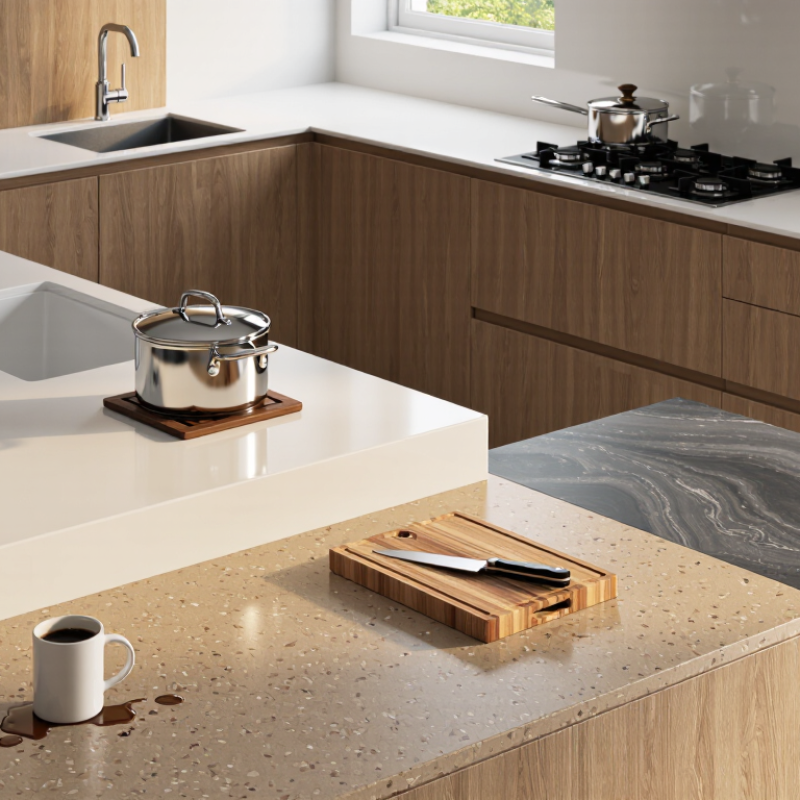
Solid Surface Countertop Materials: An Overview
Solid surface countertops are manufactured from resin, mineral fillers, and color pigments. The main types include acrylic, polyester, and hybrid compositions. Acrylic sheets are usually easier to thermoform and repair. Polyester often provides stronger color depth but can be less forgiving during fabrication. Mineral-filled options create a stone-like appearance without natural-stone seams.
Grand View Research estimated the global solid surface market at about 4 billion U.S. dollars in 2023. Its report projects approximately 5% annual growth through 2030. This demand reflects healthcare, hospitality, and residential projects requiring hygienic, low-maintenance surfaces.
Solid surface is nonporous, so spills do not quickly penetrate the material. However, it can scratch or show heat damage. No countertop wins every test. My practical preference is acrylic for curved islands and integrated sinks. Yet, careless installation can still produce visible seams.
Tips: Ask for a physical sample before ordering. Place a hot pan on a heat-protective pad. Use a cutting board every time. Check the fabricator’s seam samples under direct light. Also, confirm the repair process, because “repairable” does not mean invisible. The Freedonia Group’s countertop industry analysis highlights replacement and remodeling as major demand drivers, but market reports cannot predict every household’s habits. A busy kitchen may need stronger daily discipline than expected.
Key Types of Solid Surface Countertops
Solid surface countertops are made from nonporous materials that can create a smooth, nearly seamless work surface. The key types differ mainly in resin composition, appearance, and repairability. Acrylic solid surface is widely valued for its consistent color and thermoforming ability. Skilled fabricators can shape it around sinks or curved breakfast bars. Small scratches can often be sanded away. However, dark acrylic may show marks more clearly.
Polyester solid surface usually offers stronger color depth and a slightly glossier appearance. It can suit bathrooms, reception desks, and decorative kitchen islands. Yet it is generally less flexible than acrylic during fabrication. Seams may also appear more noticeable when installation quality is poor.
That detail matters. A low-cost installation can weaken an otherwise attractive surface.
Blended solid surface combines acrylic and polyester characteristics. It may provide improved workability with richer visual effects. Some options include mineral particles or recycled content for a stone-like texture. Always check the technical sheet before ordering. “Solid surface” does not mean every sheet performs identically.
In a busy kitchen, heat resistance, seam placement, and edge design deserve close inspection. A hot pan can still damage the finish. I have seen homeowners focus on color first, then regret ignoring repair access and daily cleaning habits.
Sample boards can mislead under showroom lighting. View them beside a window, a sink, and your actual cabinet color.
Comparing Durability, Appearance, and Maintenance
Choosing a solid surface countertop depends on daily use, not only showroom appeal. Acrylic solid surface offers seamless joints, integrated sinks, and many colors. Minor scratches can often be sanded away, although hot pans may leave marks. Engineered quartz resists stains and needs no sealing, but strong heat can damage its resin content. Houzz’s 2024 U.S. Kitchen Trends Study reports engineered quartz as a leading countertop choice, selected in about 39% of renovated kitchens. Its consistent pattern looks polished, though some homeowners find it less natural than stone.
Porcelain and sintered surfaces provide strong heat and abrasion resistance, according to performance requirements referenced in ANSI A137.1. Their thin slabs can create a modern edge, but impact damage is difficult to repair and installation requires experienced fabricators. Natural granite offers varied patterns and good heat resistance, yet its pores may require periodic sealing. The Marble Institute of America has long advised testing sealers and following the fabricator’s maintenance guidance. Real kitchens are less predictable. A busy family may value repairability more than perfect scratch resistance.
Tips: Place a heat pad beside the cooktop. Use a cutting board, even on durable surfaces. Ask for a sample, then test it with coffee, oil, and a damp cloth. Check the warranty carefully; “stain resistant” does not mean stain proof. Maintenance advice can also vary by finish, and that detail is easy to overlook.
Installation and Long-Term Care Considerations
What Are the Best Solid Surface Counter Top Types?
Solid surface countertops include acrylic-rich and polyester-rich sheets, each needing careful installation. Acrylic usually allows inconspicuous seams and on-site repairs, while polyester may offer a different sheen and color depth. The best choice depends on layout, lighting, sink design, and expected use. A trained fabricator should verify cabinet level, wall conditions, and appliance clearances before cutting. Small errors become visible quickly.
During installation, cabinets must support the entire surface without forcing it into place. Expansion gaps near walls and heat-producing appliances help reduce stress. Integrated sinks need accurate sealing and proper support beneath the bowl. Ask for a written care guide and inspect seams under normal room light. In my experience, rushed templating causes more trouble than ordinary household wear. I would still recheck color samples in daylight; showroom lighting can mislead.
Tips: Use a soft cloth and mild soap for daily cleaning. Wipe spills promptly, especially oils, dyes, and harsh chemicals. Never place hot pans directly on the surface; use a trivet. Cutting directly on the counter can leave marks. Light scratches may be refinished by a qualified professional, but deep damage needs assessment. Avoid abrasive powders and aggressive scouring pads. Care is simple. Neglect is not.
What Are the Best Solid Surface Countertop Types?
Ratings use a 1–5 scale, where 5 indicates stronger overall performance. Acrylic solid surface is highly repairable and offers seamless installation, while polyester solid surface generally provides better heat and chemical resistance. Both require routine cleaning with non-abrasive products and should be protected from prolonged direct heat.