What Is the Best Cargo Bike to Buy in 2026?

Choosing the best Cargo Bike in 2026 is less about finding one universal winner and more about matching a bike to everyday needs. A parent carrying children may prioritize a stable frame, secure seating, and easy access. Someone hauling groceries might care more about load capacity, weather protection, and turning space. Even a short test ride can reveal practical details: how the bike feels at a stop, whether the handlebars clear a narrow doorway, and how easily it fits your usual route.

This guide compares the main cargo-bike styles and the features that matter before you buy. It considers carrying capacity, motor support, battery range, braking, storage, service access, and overall cost. Specifications are useful, but they do not tell the whole story. A heavy bike can be reassuring under load, yet awkward to park. A powerful motor may help on hills, but it cannot fix poor fit. That matters. I would be cautious about calling any single model “best” without knowing the rider, cargo, and local roads. Availability and equipment can also change by market or model year, so check current details with the manufacturer or a local dealer. The aim here is a clear shortlist, not a promise that one bike suits everyone. Some trade-offs are easy to underestimate until the first busy school run or fully loaded trip.
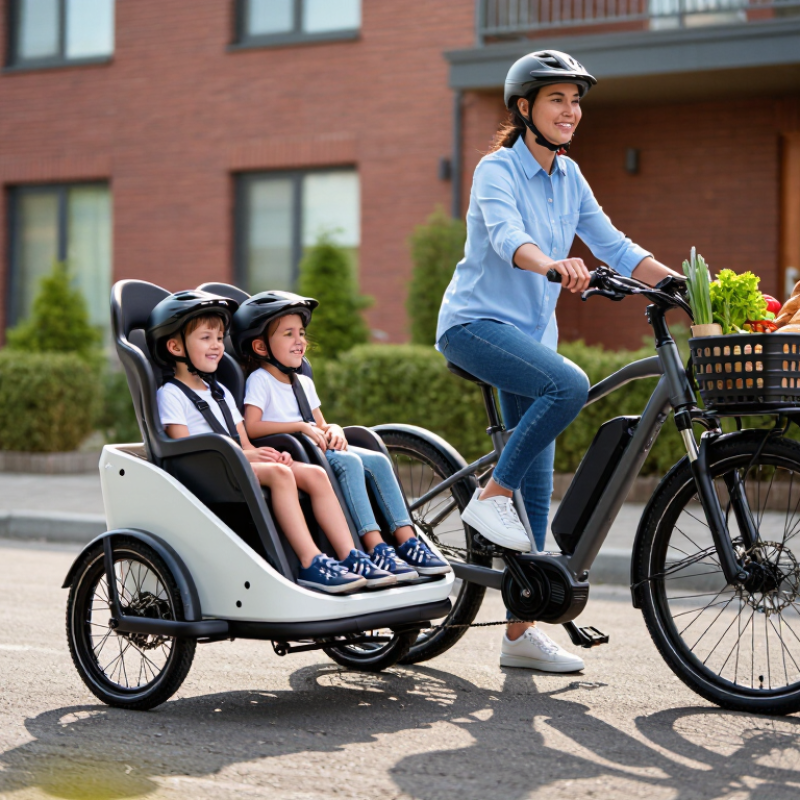
What Is the Best Cargo Bike to Buy in 2026?

Classify Cargo Bikes by Load Layout, Rated Payload, and Riding Purpose

Cargo-bike choice starts with load layout. A longtail carries panniers, a child seat, or a crate behind the rider, so it feels closer to a standard bicycle. A front-box model keeps bulky cargo visible and low, but its wide frame needs more room at doors and bike racks. Compact midtail designs trade some carrying space for easier storage. Small detail, big difference.

Rated payload matters as much as layout. Check whether the stated limit covers cargo alone or the complete load, and verify the separate maximum system weight, including rider and accessories. For groceries or one child, a modest rating may be enough; toolboxes, multiple passengers, or delivery totes call for more capacity and stable braking. The European Cyclists’ Federation’s 2014 CycleLogistics study estimated that cargo bikes could handle 25% of urban goods transport and up to 50% of light-goods deliveries in European cities. Those figures describe potential, not a guarantee for every route. I would test a loaded bike on the actual hill and tight turn; an empty test ride can be misleading. Choose for daily purpose: family errands, business deliveries, or mixed commuting. Reconsider the choice if the load changes seasonally.

Compare Longtails and Box Bikes Against Your Cargo and Passenger Needs

A longtail suits riders who need a familiar bicycle feel, a smaller parking footprint, and flexible passenger or cargo space. A child seat, footrests, and panniers can handle school runs and grocery bags, but the rear wheel may feel less steady with a moving passenger. Test it loaded, not just empty. Small details matter.

A box bike is easier for young children to climb into and keeps bags low, enclosed, and visible. Its broad front end takes more room in doorways and tight turns, and a full box can feel heavy on hills. The European Cyclists’ Federation’s Cyclelogistics Ahead project estimated that cargo bikes could replace 51% of motorized goods trips in European cities. That is modeled potential, not a promise for every household or route.

Match the frame to your heaviest regular load, not an occasional bulky errand. Measure your storage space and check the route’s steepest hill before deciding. For two children, a box often offers easier seating and weather protection; for one passenger plus commuting gear, a longtail may be simpler to store and maneuver. These are tendencies, not rules. A test ride with the actual child seats, bags, or weekly shop can change the answer. My own hesitation: box bikes feel reassuring at low speed, yet their width is easy to underestimate.

Check EU EPAC Limits: 250 W Rated Power and 25 km/h Assisted Speed

When comparing cargo bikes for 2026, check whether the model meets EU EPAC limits. For a standard EPAC, the motor’s maximum continuous rated power is 250 W. Assistance must cut out at 25 km/h and generally operate only while you pedal. A brief peak-power figure is not the same as rated continuous power, so read the technical documents, not just the sales label.

That distinction matters on a loaded ride. A compliant 250 W motor can feel capable on flat streets, yet slower on a steep hill with two children and groceries aboard. Test the bike with realistic cargo if possible. Listen for brake noise, notice how steadily it starts, and check whether you can steer it through a narrow doorway. Small details matter.

Look for clear information about the battery, brakes, permitted total load, and local servicing. Ask how the bike behaves near the 25 km/h assistance cutoff; the rider still supplies effort beyond it. Do not assume a larger wattage number means a better or lawful everyday choice. I might be tempted by extra power on a test ride, but that quick impression can hide awkward handling and a heavy frame. The paperwork deserves attention, too.

What Is the Best Cargo Bike to Buy in 2026? Check EU EPAC Limits: 250 W Rated Power and 25 km/h Assisted Speed

There is no single best cargo-bike format for every rider. The comparison below uses typical market ranges for non-branded cargo-bike designs; actual specifications, payload limits, and range vary by model and configuration.

Cargo-bike type Typical cargo capacity* Approx. bike weight Typical assisted range** Best suited to Main advantages Things to consider Overall fit
Longtail About 60–100 kg on the rear cargo area Approximately 25–35 kg About 40–100 km Daily family trips, school runs, and carrying bags or bulky items Rides more like a conventional bicycle; comparatively easy to store and maneuver Passengers and cargo sit behind the rider; check passenger equipment and the permitted rear-load limit Best all-round choice for many households
Front-loader (two-wheeled) About 80–200 kg in the front cargo area, depending on design Approximately 30–45 kg About 35–90 km Carrying children, groceries, or larger loads on regular urban journeys Large, accessible cargo area; the rider can often keep children in view Longer overall length; steering and low-speed handling may take practice, especially when loaded Best for frequent, substantial loads
Compact cargo bike About 40–80 kg on the cargo area Approximately 20–30 kg About 40–100 km Urban commuting, smaller loads, and riders with limited storage space Shorter and lighter than many full-size cargo bikes; easier to park and store Usually offers less cargo space and passenger capacity than a longtail or front-loader Best for compactness and everyday versatility
Three-wheeled cargo trike About 100–200 kg in the cargo area, depending on design Approximately 35–55 kg About 30–80 km Heavy or bulky loads on relatively flat routes and low-speed trips Can stand without a kickstand and can provide a broad cargo platform Wider and less nimble in traffic; cornering technique and storage space need consideration Best when stationary stability and load space matter most

EU EPAC check: For an electrically assisted pedal cycle to fall within the usual EPAC exemption from type approval, its motor’s maximum continuous rated power must not exceed 250 W, assistance must cut off when the rider stops pedalling, and assistance must progressively reduce and stop before the bicycle reaches 25 km/h. A walk-assist function, where fitted, is generally limited to 6 km/h. Check the applicable rules and the specific bicycle’s documentation before purchase.

How to compare capacity and range: Cargo capacity is not the same as the bicycle’s maximum permitted total weight. Check the manufacturer’s stated maximum gross vehicle weight, which includes the bicycle, rider, passengers, and cargo. Range figures are approximate and can change substantially with battery size, load, hills, temperature, tyre pressure, and assistance level.

Quick recommendation: Choose a longtail for a practical family all-rounder, a front-loader for larger regular loads, a compact cargo bike when storage and maneuverability are priorities, or a trike when a broad load platform and stationary stability are more important than narrow-space handling.

Verify Electrical Safety with UL 2849 and Battery Safety with EN 50604-1

What Is the Best Cargo Bike to Buy in 2026?

For a cargo bike, electrical safety deserves the same attention as payload, brakes, and handling. UL 2849 covers electrical systems for electric bicycles, including safety-related testing of components working together. Ask whether the exact bike configuration has been evaluated, including its battery, charger, wiring, and controls. A certificate for one component does not automatically cover the whole system. Details matter.

EN 50604-1 addresses safety requirements and test methods for lithium-ion batteries used in light electric vehicle applications. Request documentation that identifies the battery model, not just a general claim of compliance. Check that the supplied charger is specified for that battery. If parts have been replaced, ask what changed and whether the documentation still applies. I would not treat a label alone as proof of careful assembly; paperwork can be confusing, too.

Rank 2026 Models by Payload, Tested Range, Service Access, and Total Cost

A useful 2026 cargo-bike ranking should compare working limits, not just frame claims. Score payload as rider plus cargo, then test with a 25-kilogram load over the same hills, stops, and rough pavement. Record distance until assistance cuts out. Keep the tire pressure and temperature consistent. Small differences matter.

Range claims need context. A repeatable loaded test is more useful than a best-case estimate, because hills, cold weather, and frequent starts drain batteries faster. Service access deserves its own score: check whether a nearby shop can diagnose the electrical system, source common parts, and handle warranty repairs. A fast bike is less useful when a small fault sidelines it for weeks.

Total cost should include purchase price, routine maintenance, likely battery replacement, and secure storage. AAA’s 2024 Your Driving Costs report estimated average new-car ownership at $12,297 annually, based on 15,000 miles. That is a reference point, not a direct cargo-bike comparison; savings depend on replacing car trips. I would rank high-payload, easily serviced models above lighter models with impressive range claims. Still, a five-year cost estimate can miss an expensive repair. That uncertainty belongs in the ranking.

Article Source:

ENQUIRE NOW
close
Get In Touch

Use the form below to drop us an email if you have any question or comments.