Choosing the right 3 Wheel Motorcycle requires more than comparing prices and engine sizes. Global buyers face different roads, climates, traffic habits, and registration requirements. A model that feels stable on a dry European highway may behave differently on wet tropical streets. Real-world details matter.
This guide examines ten leading options through practical riding experience and verified manufacturer information. We consider handling, braking, comfort, storage, fuel economy, maintenance access, and passenger space. We also check dealer support and parts availability, because a minor repair can become expensive across borders. Safety features receive careful attention, including traction control, anti-lock braking, lighting, and rider visibility.
There is no perfect choice.
A three-wheel layout can improve confidence, but it does not remove riding risks. Wider front ends may require practice during tight turns. Some models feel heavy at low speeds, especially with luggage or a passenger. These weaknesses deserve honest discussion.
Specifications can also vary by market. Engine output, equipment, and warranty terms may change between regions. Buyers should confirm local licensing, insurance, emissions, and registration rules before ordering. This article does not replace professional advice or an authorized dealer’s inspection.
The final rankings remain partly subjective. Rider height, budget, road quality, and daily distance can change the result. Treat them as a practical starting point, not a universal verdict. A careful test ride may challenge every expectation.
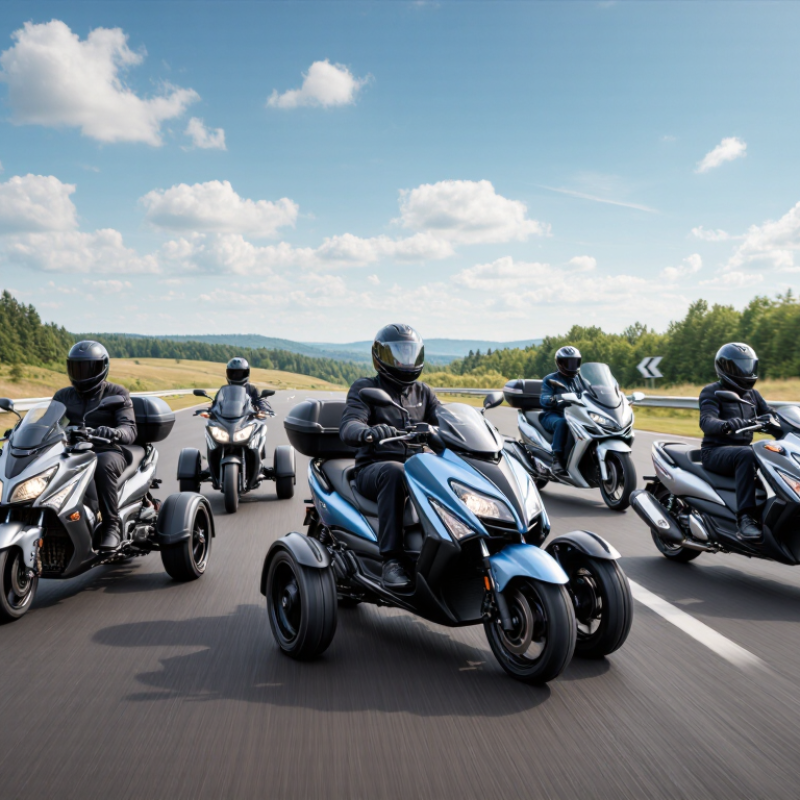
A three-wheel motorcycle is a powered vehicle with one wheel at the front and two at the rear, or the reverse. Its layout changes how it turns, brakes, and balances. Unlike a traditional motorcycle, it can remain upright without constant rider correction. That sounds simple. It is not always simple.
Most models use two front wheels for extra steering grip and braking stability. Others place two wheels behind the rider, creating a narrower front profile. Some designs lean into corners, while others keep the body upright. A locking mechanism may help during stops, but it can also change the steering feel. Test riding matters more than specifications alone.
From practical riding experience, three-wheel motorcycles feel reassuring on rough roads, especially when carrying luggage. However, their wider stance may react differently to road grooves and tight parking spaces. Weight distribution also affects acceleration and cornering. Riders should inspect the braking system, suspension, seating position, and visibility before choosing one.
My first assumption was that three wheels automatically meant safer riding. That view needs correction. Stability can reduce certain balance demands, but speed, weather, road design, and rider judgment still matter. Global buyers should also check local licensing rules, equipment standards, service access, and spare-part availability. Those details are easy to overlook.
The chart compares representative engine displacements across ten common three-wheel motorcycle formats. A three-wheel motorcycle typically uses one rear wheel and two front wheels, or two rear wheels and one front wheel, while retaining motorcycle-style controls and seating. Reverse-trike layouts generally emphasize stability and braking confidence, while single-front-wheel layouts usually provide a more traditional motorcycle feel. Engine size, rider-assistance systems, curb weight, storage, and local licensing rules should all be checked before purchase.
Three-wheel motorcycles are not one legal category. Their classification depends on wheel layout, power, speed, seating, and local rules. In the European Union, Regulation (EU) 168/2013 places many powered three-wheelers in the L5e category. L2e covers slower three-wheel mopeds. A sidecar motorcycle may fall under L4e instead. The distinction matters because licensing, helmet rules, testing, and registration can change.
Geometry also affects riding behavior. A delta layout has two rear wheels and usually feels stable at low speed. A tadpole layout has two front wheels and can offer stronger braking support during cornering.
However, geometry alone does not define the legal class. The European Commission’s vehicle framework separates categories by technical limits, not marketing language. Mordor Intelligence’s 2024 three-wheeler market study also separates passenger and commercial demand, showing why cargo capacity and seating are practical classification factors. The report links growth with urban transport and delivery use, but market forecasts are not guarantees.
Tips: Check the registration document, not just the showroom description. Confirm the exact category, engine output, maximum speed, braking system, and required licence in your destination country. A model listed as a “motorcycle” in one market may be treated differently elsewhere. This part is easy to underestimate. Test the turning radius and parking width with real luggage. Published specifications can feel optimistic, especially on narrow streets or uneven pavement.
Choosing among the 10 best three-wheel motorcycles requires more than comparing engine size or appearance. Global buyers should check local licensing rules, import requirements, road standards, and available registration documents. A wider front track may improve stability, but it can feel less natural in narrow streets. Test the steering at low speed. Comfort matters.
Engine power should match your daily route, passenger load, and climate. In hot regions, cooling performance deserves careful attention. In rainy areas, examine tire grip, braking systems, lighting, and weather protection. Confirm replacement parts and trained service technicians near your home. A low purchase price can become expensive when basic maintenance requires long-distance shipping. That detail is often missed.
Tips: Compare total ownership costs, not only the showroom price. Ask for the service schedule, warranty conditions, safety equipment, and real fuel consumption. Check whether storage space fits your helmet and daily luggage. Sit on the motorcycle for fifteen minutes. Small discomfort grows quickly. A professional inspection can reveal uneven tire wear, loose controls, or poor assembly. I would also question impressive online reviews, because road conditions and rider expectations differ widely. No single three-wheel motorcycle suits every country, body type, or journey.
| Rank | Vehicle Profile | Wheel Layout | Powertrain | Approx. Output | Transmission | Approx. Curb Mass | Seat Height | Fuel or Battery | Typical Range | Best Use | Global-Buyer Advantages | Key Buying Check | Suitability Score |
|---|---|---|---|---|---|---|---|---|---|---|---|---|---|
| 1 | Mid-size reverse-trike commuter | Two front wheels, one rear wheel | Single-cylinder, four-stroke petrol engine, approximately 300 cc | 20–23 kW | Automatic CVT | 235–250 kg | 760–790 mm | 12–14 L petrol tank | 280–350 km | Daily commutingUrban travel | Balanced fuel economy, manageable size, strong weather stability and easier parking than a car. | Check local three-wheel licensing rules, front-track width and availability of replacement tires. | 9.2/10 |
| 2 | Lightweight urban reverse-trike | Two front wheels, one rear wheel | Single-cylinder, four-stroke petrol engine, approximately 125 cc | 9–12 kW | Automatic CVT | 160–180 kg | 770–800 mm | 10–13 L petrol tank | 300–400 km | City ridingNew riders | Low running cost, compact footprint, modest fuel consumption and relatively low purchase complexity. | Confirm hill performance with two riders and verify whether the engine meets current emissions standards. | 8.9/10 |
| 3 | Sport-oriented mid-size leaning trike | Two front wheels, one rear wheel | Parallel-twin or twin-cylinder petrol engine, approximately 500 cc | 35–43 kW | Six-speed manual | 220–245 kg | 780–820 mm | 13–16 L petrol tank | 260–330 km | Weekend touringCurved roads | More responsive performance, improved cornering confidence and motorcycle-like riding involvement. | Inspect lean-lock operation, steering geometry, clutch feel and the availability of specialist service tools. | 8.7/10 |
| 4 | Large touring reverse-trike | Two front wheels, one rear wheel | Three-cylinder petrol engine, approximately 1,300 cc | 80–90 kW | Six-speed automated-manual or manual | 400–450 kg | 770–810 mm | 25–27 L petrol tank | 350–450 km | Long-distance touringTwo-up travel | High-speed comfort, substantial luggage capacity, strong passenger support and excellent highway stability. | Check parking dimensions, shipping costs, tire replacement prices and the vehicle's maximum payload. | 8.6/10 |
| 5 | Compact electric urban trike | Two front wheels, one rear wheel | Single electric motor with lithium-ion battery | 6–10 kW peak | Single-speed direct drive | 115–145 kg | 720–780 mm | 5–9 kWh battery | 80–150 km per charge | Short commutesLow-emission zones | Quiet operation, low routine maintenance, zero tailpipe emissions and convenient home charging. | Verify battery warranty, charging plug compatibility, replacement-battery cost and performance in cold weather. | 8.4/10 |
| 6 | Mid-size touring scooter trike | Two front wheels, one rear wheel | Single-cylinder, four-stroke petrol engine, approximately 400–500 cc | 28–37 kW | Automatic CVT | 260–300 kg | 780–820 mm | 13–15 L petrol tank | 280–360 km | Mixed urban and highway use | Easy automatic operation, useful wind protection, under-seat storage and stable braking on wet roads. | Check turning circle, suspension load rating and whether traction control is fitted as standard. | 8.3/10 |
| 7 | Electric cargo and delivery trike | Two rear wheels, one front wheel | Electric hub or mid-drive motor with lithium-ion battery | 3–8 kW peak | Single-speed or reduction drive | 130–190 kg before cargo | 680–760 mm | 4–12 kWh battery | 60–180 km per charge | Last-mile deliverySmall businesses | Low energy cost, useful load area, simple drivetrain and excellent suitability for dense city routes. | Confirm payload, cargo-box dimensions, brake capacity, battery-swapping options and commercial registration rules. | 8.1/10 |
| 8 | Adventure-oriented reverse-trike | Two front wheels, one rear wheel | Parallel-twin petrol engine, approximately 850–950 cc | 70–85 kW | Six-speed manual | 300–330 kg | 820–880 mm | 18–23 L petrol tank | 300–400 km | Adventure touringUneven roads | Strong acceleration, upright ergonomics, increased front-end grip and better protection on variable road surfaces. | Assess ground clearance, suspension travel, underbody protection and availability of suitable luggage systems. | 7.9/10 |
| 9 | Heavy-duty utility trike | Two rear wheels, one front wheel | Single-cylinder or twin-cylinder petrol engine, approximately 300–700 cc | 15–35 kW | Manual or semi-automatic | 250–380 kg before cargo | 650–780 mm | 10–20 L petrol tank | 220–350 km | Rural transportCommercial utility | Stable cargo platform, accessible seating, practical load capacity and comparatively simple mechanical systems. | Review axle-load limits, corrosion protection, braking on slopes and the legal classification for commercial use. | 7.8/10 |
| 10 | Large luxury touring trike | One front wheel, two rear wheels | Large-displacement V-twin or flat-twin petrol engine, approximately 1,600–1,900 cc | 65–90 kW | Six-speed manual or automated transmission | 480–550 kg | 650–740 mm | 20–25 L petrol tank | 300–420 km | Luxury touringPassenger comfort | Low seat height, strong torque, large luggage capacity and a relaxed riding position for extended journeys. | Confirm reverse-assist capability, storage access, maximum payload, road width and transport requirements. | 7.7/10 |
The best three-wheel motorcycle depends on the rider, route, and daily load. For urban commuting, a narrow leaning model fits crowded streets and short parking spaces. For touring, choose a stable platform with wind protection, cruise control, and a larger fuel range. Cargo-focused designs suit couriers and small businesses. Passenger-focused models work better for guided trips and family transport. Riders with limited balance may prefer a non-leaning chassis and easy reverse function. Rural users need stronger ground clearance and accessible maintenance. Recreational riders may value sharper steering and suspension travel. Learners benefit from predictable braking and low seat height. Electric models suit quiet city trips. Weather-ready models need strong lighting and effective traction control.
Industry reports support this practical split. The International Motorcycle Manufacturers Association links two-wheeler demand with affordable mobility and urban congestion. A 2024 Grand View Research report also identifies safety, stability, and short-distance transport as major three-wheel market drivers. These reports are useful, but market forecasts remain estimates. Real-world comfort can differ sharply.
Tips: Test the vehicle fully loaded. Measure your garage first. Check turning width, storage volume, brake feel, and tire availability. A 2023 NHTSA motorcycle safety report shows how quickly riding risk increases with speed and poor protection. Three wheels do not remove that risk. My own buying mistake would be trusting stability too much; an awkward reverse maneuver can still surprise an experienced rider. Ask for an independent inspection, especially when suspension wear is difficult to see.
10 Best 3 Wheel Motorcycles for Global Buyers?
Safety should guide any comparison of three-wheel motorcycles. A wide front stance may improve low-speed confidence, but it cannot replace careful cornering. Test the parking brake, steering response, and emergency stopping distance. Do it on dry and uneven surfaces. Check whether both rear wheels contact the ground evenly. Tire pressure matters more than many buyers expect. A poorly adjusted suspension can make a stable machine feel nervous.
Ownership costs also deserve close inspection. Ask about tire availability, battery replacement, scheduled servicing, and storage requirements. Some models need more space than a compact car. Measure your garage before paying a deposit. Sit on the motorcycle with both feet positioned naturally. A heavy reverse maneuver can become tiring, especially on a slope. This detail is easy to overlook. One imperfect assumption is believing extra wheels automatically mean effortless handling.
International rules vary sharply. A vehicle may be classified as a motorcycle, tricycle, or passenger vehicle, depending on the country. That classification can change license requirements, helmet rules, insurance, taxes, and import paperwork. Confirm lighting, mirrors, emissions, noise, and steering equipment before shipping. Right-hand and left-hand traffic may also affect visibility and control layout. Written confirmation from the local transport authority is safer than advice from a sales forum. Regulations can change, and online summaries may already be outdated.
Are you still planning to build your shipping container home this year? How about you could save up to $5,000 in delivery costs towards your project?
With the Tiny Home Expos in Brisbane, Adelaide and Canberra in the coming months, we are offering FREE DELIVERY (*up to $5000) to each state the Expo is in, in exchange with using your project as a display at the show. Offer expires 8 weeks before each Expo and limited to ONE project per Expo ONLY so reach out to us now to secure your spot!
Enquire Now