Choosing the right 40ft shipping container is not simply a matter of selecting the largest available box. Cargo dimensions, loading methods, climate, route conditions, and port handling can change the decision completely. A standard dry container may suit boxed machinery, pallets, or household goods. A 40ft high-cube container adds valuable internal height for bulky, lightweight cargo. Reefer units protect temperature-sensitive products, while open-top and flat-rack designs support unusually tall or heavy equipment.
The details matter.
Marc Levinson, author of The Box and a respected shipping historian, observed, “The container made shipping cheap enough to make a huge difference in the world economy.” His point remains relevant for global buyers. A container is more than steel walls and corner castings. It is part of a carefully connected transport system involving vessels, railways, trucks, terminals, and warehouses. Small specification errors can create expensive delays. Door placement, floor condition, payload limits, ventilation, and CSC plate validity deserve close inspection before purchase or leasing.
This 2026 guide compares the best 40ft shipping container types for different commercial needs. It considers practical cargo examples, including furniture, industrial components, produce, and temperature-controlled goods. It also explains where each design performs well, and where it may disappoint. Not every “best” option is best everywhere. A high-cube unit can waste space when cargo is dense. A reefer can become costly when stable temperature control is unnecessary. Buyer expectations are sometimes too simple. Careful planning still beats attractive specifications.

ISO 668:2020 defines the nominal dimensions of 40ft intermodal containers. A standard unit measures 12.192m long, 2.438m wide, and 2.591m high externally. Its typical internal volume reaches about 67.7m³. A high-cube unit keeps the same length and width, but raises the external height to 2.896m. Internal volume usually reaches about 76.4m³. That extra 8.7m³ can accommodate taller cartons, lightweight furniture, or more packaging space. The figures come from ISO dimensional requirements and common industry specifications.
UNCTAD’s Review of Maritime Transport 2024 records continued growth in container-ship capacity. This trend supports wider access to 40ft equipment, but availability still varies by port and season. A higher cube does not automatically provide higher payload. Check the container’s CSC plate, tare weight, and local road limits. The door opening also matters. A box may fit inside, yet fail at the doors.
Tips: Calculate usable volume, not only advertised volume. Leave clearance around corner posts and the ceiling. Test one loaded carton pattern before booking many units. In my experience, a simple spreadsheet can overestimate capacity. Recheck the floor plan manually. Small mistakes become expensive.
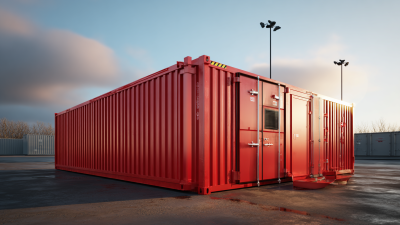
A 40ft container may show a 30,480 kg gross limit, but that figure is not payload. It includes cargo, pallets, packaging, and the container itself. ISO 668:2020 provides the standard equipment ratings behind this widely used limit. The verified maximum always appears on the container’s safety approval plate.
Tare weight creates the practical difference. A standard 40ft dry container commonly weighs about 3,700–4,200 kg empty. Its working payload may therefore reach roughly 26,280–26,780 kg. A 40ft high-cube unit often weighs slightly more, reducing payload by several hundred kilograms. Refrigerated, open-top, and side-opening types can weigh 4,500–5,500 kg. Their usable payload may fall near 25,000–26,000 kg.
The World Shipping Council’s Container Shipping Industry Overview and UNCTAD’s Review of Maritime Transport emphasize accurate container data and verified gross mass for safe handling. The VGM must include cargo, packing materials, and tare weight. A scale reading is safer than a spreadsheet estimate. Weight distribution matters too; dense machinery placed at one end can overload the floor or create unstable lifting forces. Port rules, road limits, and axle restrictions may reduce the legal transport weight below 30,480 kg. Numbers can look precise, yet container tare values change with repairs, flooring, doors, and manufacturing design. Experienced buyers should request the actual tare, payload rating, and valid CSC plate before booking. Mistakes happen. Planning only from the headline gross limit is one of them.
Choosing a 40ft container depends on cargo shape, sensitivity, and loading access. A dry van suits boxed goods, furniture, and palletized cargo. It offers enclosed protection from rain, dust, and handling impacts. Before loading, inspect the floor, door seals, locking bars, and corner posts. A clean appearance can hide water damage.
Reefer containers control temperature for food, pharmaceuticals, and other sensitive products. They need a stable power supply, correct pre-cooling, and continuous temperature records. Never use a reefer as a simple dry van without checking its machinery. Small temperature mistakes can damage an entire shipment.
Open-top containers help load tall or heavy cargo with a crane. Their removable roof is useful, but weather protection becomes more difficult.
Flat racks support oversized machinery, steel structures, and cargo wider than a standard container. Proper lashing is critical because the cargo may face strong wind and uneven pressure.
Tank containers carry approved liquids or gases under specific technical requirements. Cargo compatibility, valve condition, pressure limits, and cleaning records deserve careful review. A tank that looks ready may still need inspection documents.
I have seen planning teams focus on container price and overlook loading equipment, route restrictions, or actual payload limits. That decision often creates avoidable delays. For global buyers, photographs help, but a recent inspection report is more reliable. Local handling conditions can change the best choice.
2026 Best 40ft Shipping Container Types for Global Buyers
For a 40ft container, the CSC Safety Approval Plate is the first document I check. It should be fixed firmly near the door and remain readable. The plate normally shows the container number, manufacturer, build date, tare weight, maximum gross weight, and allowable payload. It also records the first examination date and the next inspection date, or an approved continuous examination reference. Missing details are a warning sign. Do not rely on a photocopy alone.
A valid plate does not prove that the container is ready for service today. Inspect the corner castings, locking bars, door seals, roof, side rails, and floor from inside and outside. Look for fresh welds, twisted frames, deep corrosion, light entering through the roof, or doors that scrape the threshold. I once found a sound-looking unit with a bent lower corner casting. It needed repair before loading. Small defects can become expensive problems.
A 40ft high-cube container is about 2.9 m high externally, but transport planning needs more than the container height. Add the chassis, road camber, bridge limits, terminal equipment, and local route restrictions. Measure the loaded combination, not just the box. Allow practical clearance above the highest point. That margin may feel excessive until a low structure proves otherwise. Inspection records should match the actual container number, not a similar unit. Photos, measured dimensions, and signed reports improve traceability, although paperwork can still contain mistakes.
Global buyers often compare 40ft containers by volume first. That is useful, but incomplete. A standard dry container commonly carries about 67–68 m³. Its usual ISO size and type code is 42G1. A 40ft high-cube unit offers roughly 75–76 m³, often identified as 45G1. These codes support clearer communication between suppliers, freight forwarders, terminals, and customs teams.
Port handling depends on more than length. High-cube units need additional clearance under cranes, warehouse doors, and road routes. Terminal staff also check corner castings, twist-lock positions, and verified gross mass before loading. For temperature-controlled cargo, codes such as 42R1 or 45R1 may apply, but insulation and machinery reduce usable space. Open-top versions can simplify tall cargo loading, although cranes and lashing plans become more important.
Capacity figures describe internal volume, not practical loading space. Pallet height, door width, packaging strength, and weight distribution can reduce the real payload. A dense shipment may reach the weight limit before filling 67 m³. A light shipment may need nearly 76 m³ but still require careful restraint. Purchasing teams should request the ISO code, internal dimensions, tare weight, maximum gross mass, inspection status, and recent photographs. Small discrepancies matter. I have seen volume estimates fail because buyers ignored floor strength and door clearance. Check the data against the carrier and port before booking.
Practical comparison of widely used 40ft container formats for international ocean freight, inland transport, and port operations.
| Container Type | Common ISO 6346 Code | Typical Internal Dimensions (L × W × H) |
Nominal Capacity | Typical Tare Weight | Typical Payload Range | Best-Fit Cargo | Port and Intermodal Handling |
|---|---|---|---|---|---|---|---|
| 40ft General Purpose Dry Container | 42G1 | Approx. 12.03 × 2.35 × 2.39 m | Approx. 67.7 m³ | Approx. 3,700–4,000 kg | Approx. 26,000–26,700 kg | Cartons, machinery, furniture, packaged materials, and general non-temperature-sensitive cargo. | Standard ISO corner castings; compatible with container cranes, ship cell guides, rail wagons, chassis, twistlocks, and standard terminal handling equipment. |
| 40ft High Cube Dry Container | 45G1 | Approx. 12.03 × 2.35 × 2.69 m | Approx. 76.3–76.4 m³ | Approx. 3,900–4,300 kg | Approx. 25,500–26,500 kg | Lightweight, bulky, or high-volume cargo requiring additional vertical clearance. | Uses standard ISO handling equipment and ocean-cell positions. Confirm inland route height restrictions, rail clearances, tunnel limits, and terminal acceptance before booking. |
| 40ft High Cube Refrigerated Container | 45R1 | Approx. 11.58 × 2.29 × 2.54 m | Approx. 67.0–67.5 m³ | Approx. 4,500–5,000 kg | Approx. 28,000–29,500 kg, subject to gross-weight limits | Frozen food, chilled food, pharmaceuticals, flowers, chemicals, and other temperature-controlled cargo. | Requires powered reefer plugs at terminals and onboard vessels, temperature monitoring, pre-trip inspection, airflow clearance, and possible genset support during inland moves. |
| 40ft High Cube Ventilated Dry Container | 45G1 with ventilated design | Approx. 12.03 × 2.35 × 2.69 m | Approx. 74–76 m³ | Approx. 4,000–4,400 kg | Approx. 25,500–26,300 kg | Cargo needing passive air exchange, such as selected agricultural products, coffee, cocoa, timber, and moisture-sensitive goods. | Normally handled as a dry high cube when the unit retains standard corner castings. Ventilation is passive; it does not provide active temperature control or reefer functionality. |
| 40ft High Cube Insulated Container | Usually 45G1; verify equipment-specific code | Approx. 11.9–12.0 × 2.34 × 2.55–2.65 m | Approx. 71–75 m³ | Approx. 4,000–4,600 kg | Approx. 25,500–26,300 kg | Cargo requiring improved thermal buffering but not continuous mechanical refrigeration. | Generally compatible with standard container handling when equipped with ISO corner castings. Confirm terminal rules because insulation thickness and specialized fittings can vary. |
Buyer Notes
Are you still planning to build your shipping container home this year? How about you could save up to $5,000 in delivery costs towards your project?
With the Tiny Home Expos in Brisbane, Adelaide and Canberra in the coming months, we are offering FREE DELIVERY (*up to $5000) to each state the Expo is in, in exchange with using your project as a display at the show. Offer expires 8 weeks before each Expo and limited to ONE project per Expo ONLY so reach out to us now to secure your spot!
Enquire Now